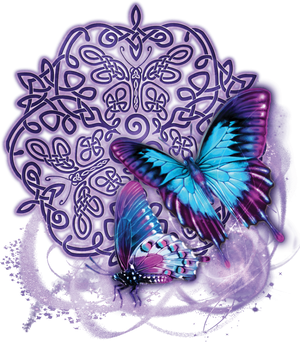
Illustration
of two luminous blue and violet butterflies flying in front of a circular
Celtic knot design rendered in layered lavender and deep purple tones. the knot
features dense interlaced loops, spirals, and triquetra-style forms with
precise over-and-under crossings. Sparkling mist and light trails swirl beneath
the butterflies, creating motion against a darkened background. this artwork is
titled “Celtic Butterfly” and created by Brigid Ashwood
You
drift first into the motion of the wings. One butterfly lifts higher, its upper
wings flared wide in electric blue edged with deep violet, while the second
glides lower, wings angled downward as if caught mid-turn. The air between them
feels charged — not chaotic, but alive — as pale, glittering particles swirl
upward from below, tracing invisible currents. Behind them, the Celtic knot
does not recede; it holds steady, a quiet force anchoring everything in place.
Your
eye is drawn back to the knotwork and stays there. The circular form is densely
packed with interlaced paths, every strand following strict over-and-under
logic with no breaks, no shortcuts. You can trace a single band as it loops
inward, crosses beneath another, re-emerges, then tightens into a spiral before
expanding again. In several places, the strands narrow slightly before
widening, a subtle change in line weight that signals intentional flow rather
than repetition. On denim, these narrowing points catch light differently as
pigment settles into the twill, making the crossings feel carved instead of
drawn. It matters because the knotwork reads as constructed — discipline
holding motion.
A
shift in mood happens at the center of the circle, where multiple spirals
converge. The lines compress here, their curves tightening into inward turns
that feel like gathering energy. The lavender tones deepen into indigo near
these intersections, while pale highlights trace the upper edges of strands to
clarify which path rises and which yields. On fabric, those highlights break
across the weave into tiny flashes, making the knot feel responsive to
movement. The symbol doesn’t just sit — it reacts.
Then
comes a new kind of freedom in the butterflies themselves. Their wings are
rendered with smoother gradients than the knot, pigments flowing from turquoise
to cobalt to plum without hard edges. Vein lines are suggested rather than
outlined, allowing color to carry the structure. At the wing tips, violet
darkens and gathers, grounding the brightness with weight. On denim, these
gradients fragment gently, especially along folds, giving the illusion that the
wings shift color as the body moves. The butterflies feel alive in contrast to
the knot’s eternal stillness.
Color
becomes emotion in the relationship between the two. The cool blues lift
forward, while the purples pull back into mystery. The knot sits between them
as a mediator — ancient, controlled, deliberate — while the butterflies embody
transformation and release. Fine sparkles and mist-like trails weave beneath
their flight paths, echoing the curves of the knot without copying it. These
particles scatter lightly, and on fabric they disperse unevenly, becoming
texture rather than decoration. They matter because they bridge the worlds:
order dissolving gently into motion.
The
background remains intentionally subdued, allowing the knot’s geometry and the
butterflies’ color to define depth. A faint halo surrounds the circle,
softening its edge just enough to feel luminous rather than rigid. The entire
composition balances precision and freedom — line against light, discipline
against change.
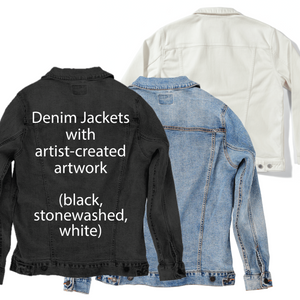
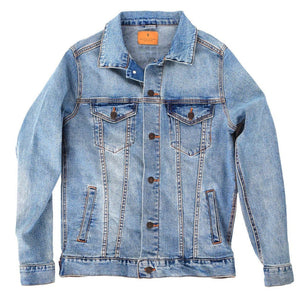
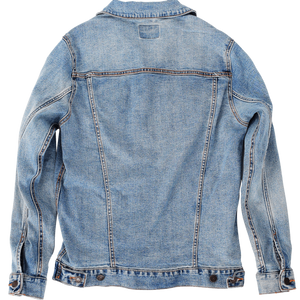
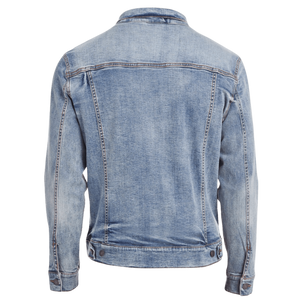
When
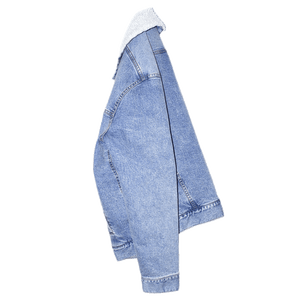
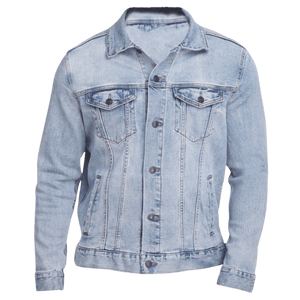
this artwork lives on stonewashed denim, the knot softens first. The crisp
over-under crossings diffuse slightly as pigment spreads into the worn grain,
but the structure remains readable. The spirals feel older here, weathered,
like something unearthed rather than newly drawn. The butterflies mellow as
well, their blues shifting toward softer tones, while the sparkles embed into
the fabric like dust caught in sunlight. As the jacket moves, the knot’s
crossings flicker subtly, giving the impression of slow, internal rotation. The
emotional tone becomes protective and mythic — transformation guided by
lineage.
On
stonewash, the piece feels like an artifact carried forward, not a surface
image.
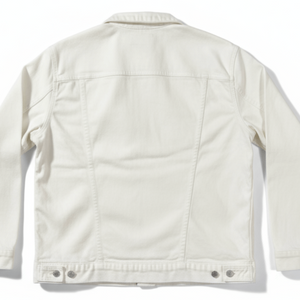
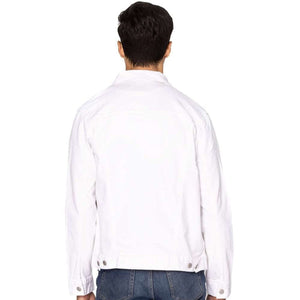
On
white denim, clarity asserts itself. Every strand of the knotwork becomes
sharply legible, each crossing clean and decisive. You can follow the logic of
the interlace easily — where lines enter, where they exit, how they return. The
butterflies intensify here, their blues luminous and immediate, their wing
edges crisp. This clarity matters because it frames transformation as
intentional, not accidental — change that knows where it comes from.
The
sparkles on white denim read like points of light suspended in air, adding lift
without clutter. The artwork feels ceremonial and awake.
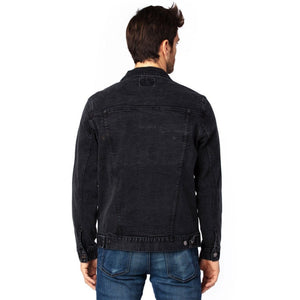
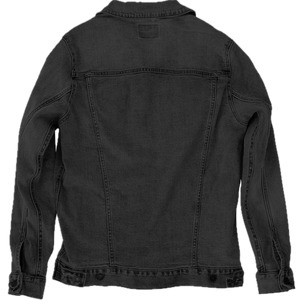
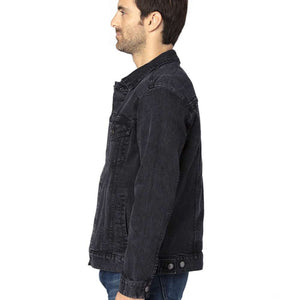
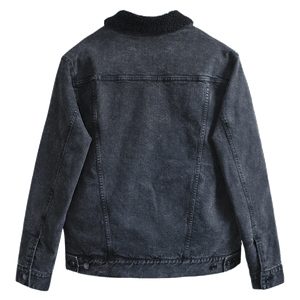
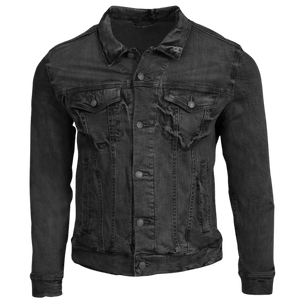
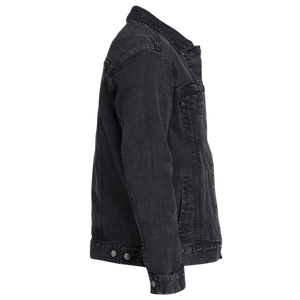
On
black denim, the scene turns powerful and intimate. The knot glows in layered
purples against the dark base, its structure feeling carved into shadow.
Over-under crossings deepen, and the spirals pull the eye inward. The
butterflies become radiant focal points, their blues electric against the
darkness, their motion dramatic and cinematic.
The
mist and sparkles appear and disappear as the fabric folds, like energy
revealed only in movement. On black denim, the artwork feels like a sigil of
transformation — ancient structure holding modern magic — something worn close
not for decoration, but for meaning.