a richly detailed fantasy forest scene showing multiple fairy children with translucent wings arranged across a flowing landscape that shifts through winter, spring, summer, and autumn. the fairies have soft expressive faces and pastel wings, surrounded by animals including polar bears, wolves, deer, foxes, squirrels, raccoons, otters, rabbits, owls, and birds. snow, flowers, green foliage, and autumn leaves appear simultaneously, connected by streams, stones, and paths. layered painterly textures and glowing colors fill the scene. this artwork is titled “A Season of Fairies” and created by Sheena Pike
You drift first into the abundance, because the image refuses a single entry point. The scene opens outward in every direction, layered with figures, animals, and environments that shift seamlessly from one season to another. At the left edge, winter asserts itself through pale blues and whites: snow-covered ground, icy textures, and cool light. A white wolf rests alert near frozen water, its fur painted in fine strokes that thicken along the chest and soften toward the flanks. Nearby, polar bears emerge from snowy terrain, their rounded forms rendered with gentle shading that keeps them calm rather than imposing.
As your eye moves inward, spring and summer begin to surface. Green foliage thickens, flowers bloom in clusters of pinks, whites, and purples, and the palette warms. At the center, a fairy child with lavender wings gazes outward, framed by blossoms and small woodland creatures. Her wings are translucent, veined delicately, catching light in pale gradients that shift from lilac to soft blue. Butterflies hover nearby, their wings angled diagonally, echoing the fairy’s posture and creating a subtle rhythm of motion.
Paths and streams connect everything. A stone walkway curves through the center of the composition, stepping across shallow water that reflects sky tones of turquoise and gold. Animals gather naturally along these transitions: a young deer stands near the path, ears lifted, body slender and lightly dappled. A rabbit sits close to the stones, compact and grounded, while a fox appears to the right, its russet fur thick and directional, tail curled inward as if pausing mid-step.
A shift in mood happens as autumn emerges on the right side. Trees glow in amber, rust, and gold, leaves cascading downward in layered strokes. A fairy child dressed in warm tones cups a small squirrel in her hands, the animal’s tail arcing upward, its fur painted in short, energetic strokes. Nearby, a bear cub peeks forward, expression soft and curious rather than wild. Mushrooms cluster at the base of trees, caps rounded and textured, anchoring the seasonal transition with earthy detail.
Throughout the scene, owls perch in branches, birds lift from the background, and small animals tuck themselves into corners of grass and stone. Nothing feels isolated. Every figure overlaps visually with another — wings intersect foliage, animals overlap rocks, water threads through roots — creating a continuous living environment rather than separated vignettes. The painterly style reinforces this unity: soft blending in faces and skies, denser texture in fur, bark, and leaves, and glowing highlights where light touches wings and water.
Color becomes the unifying force. Cool blues and violets dissolve into greens, which warm into yellows, oranges, and reds without hard borders. There are no harsh edges between seasons, only gradual transitions marked by changes in texture and hue. The fairies’ expressions remain gentle and observant throughout, their postures relaxed, hands often open or resting, reinforcing a sense of quiet guardianship rather than action.
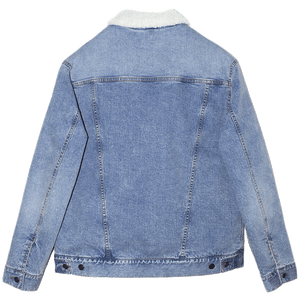
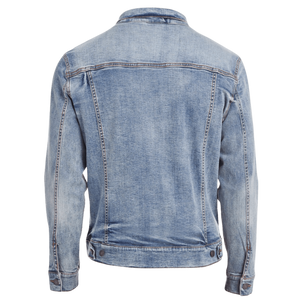
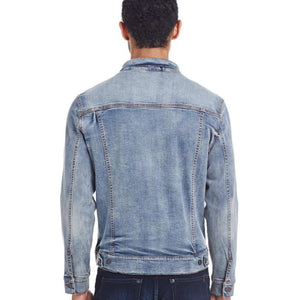
On stonewashed denim, the entire composition softens into a dreamlike tapestry. The seasonal boundaries blur further as pigment sinks into the worn twill, muting sharp contrasts between snow and foliage. Winter blues warm slightly, spring greens mellow, and autumn golds deepen into earthy tones. The animals’ fur textures become gentler, their outlines less defined, making the scene feel remembered rather than observed.
The fairy wings on stonewash lose some translucency but gain warmth, appearing embedded into the fabric like a mural that has aged naturally. Streams and paths merge more smoothly with surrounding terrain, enhancing the sense that everything belongs together. Emotionally, the artwork on stonewashed denim feels nostalgic and comforting — like a well-loved storybook page softened by time.
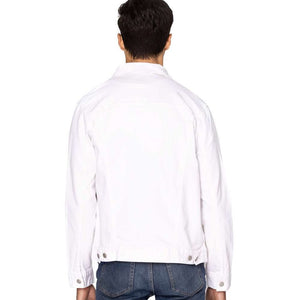
On white denim, clarity and separation take hold. Each seasonal zone becomes more distinct: snow reads crisp and bright, flowers pop with fresh color, and autumn leaves glow vividly. Individual animals stand out more clearly — the fox’s fur, the deer’s spots, the wolves’ facial features all sharpen. The fairy wings regain their delicate veining, and butterflies become clear accents rather than atmosphere.
The paths and streams read with precision, guiding the eye deliberately through the scene. On white denim, A Season of Fairies feels illustrative and luminous, like a gallery print where every detail is meant to be explored. The emotional tone shifts toward wonder and discovery, inviting closer inspection of each figure and creature.
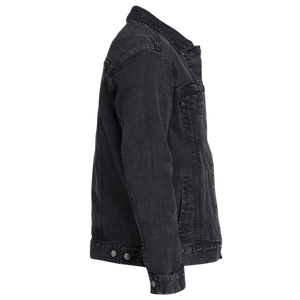
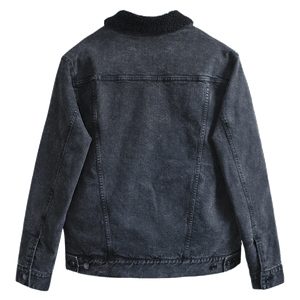
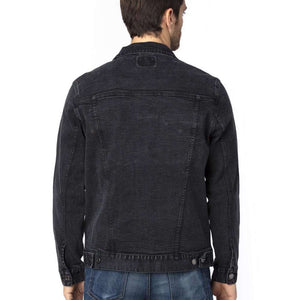
On black denim, the scene becomes intimate and cinematic. The background darkness absorbs outer edges, causing illuminated elements — fairy faces, wings, water highlights, and warm foliage — to glow forward. Winter areas deepen into midnight blues, while autumn golds and reds feel richer and more enclosed. The animals’ eyes and faces draw attention immediately, creating moments of connection within the larger scene.
The fairies’ wings feel almost lit from within against the dark fabric, and the seasonal transitions become more emotional than descriptive — cool to warm, quiet to abundance. On black denim, the artwork feels like a secret forest held close to the body, where all seasons coexist in a single, living moment.