A dark, patterned background filled with repeating lotus-like floral silhouettes in black and charcoal tones. centered is a rough-edged cream-colored rectangular paint field containing black serif text that reads “Embrace yourself in the most crowded spaces.” Delicate gold leaf-style botanical accents with thin stems and small leaves appear diagonally across the composition. This artwork is titled “Be Yourself” and created by Canvas & Quotations (Monika Chugh and Alka Chopra)
You drift first into the density of the background. Repeating lotus-like forms press closely together, their petals overlapping in dark charcoal and black, some shapes crisp, others softened by wash and bleed. The pattern feels crowded but intentional — a field of forms layered so tightly that individual flowers almost dissolve into one another. The ink pools unevenly, leaving lighter patches and grainy textures where the pigment thins. It feels lived-in, compressed, full.
At the center, the crowd opens.
A rough-edged cream rectangle cuts through the darkness like a breath held open. Its borders are irregular, torn by dry-brush texture and uneven pressure, with flecks of black breaking through at the edges. The space is not perfectly clean — it feels claimed rather than cleared. Inside it, the text sits calmly and evenly spaced:
“Embrace yourself in the most crowded spaces.”
The lettering is simple and restrained, printed in black with no ornamentation, allowing the words to carry weight without decoration. The sentence ends softly, without punctuation demanding emphasis. On denim, this central field would remain visually stable while the surrounding darkness shifts and absorbs light, reinforcing the idea of steadiness amid compression. It matters because the space feels protected, not isolated.
Your eye then notices the gold accents. Thin botanical stems stretch diagonally across the composition, their lines delicate and fluid against the heavy background. Small leaves sprout at intervals, each leaf brushed in warm metallic gold that contrasts sharply with the matte blacks and creams. The gold is not loud — it glows quietly, catching light in a way the ink does not. On fabric, these gold shapes would lift first along the weave’s ridges, appearing and disappearing subtly as the garment moves. They matter because they introduce gentleness without demanding room.
A shift in mood happens when you see how nothing truly separates. The cream center does not erase the background — the dark pattern presses right up to its edges. The gold stems pass near and around it. Everything coexists. The message does not ask for escape from the crowd; it asks for presence within it.
The lotus pattern itself reinforces this. Petals repeat again and again, some partially visible, some cut off by the frame, suggesting continuation beyond the edges. The forms are familiar but never singular. On denim, the darkest ink areas would sink deeply into the twill valleys, while lighter charcoal areas would catch texture, creating depth that feels physical rather than flat. The crowd becomes something you can feel.
On stonewashed denim, the black background softens into charcoal and smoke. The repeating lotus shapes blur slightly into one another, becoming more atmospheric and less rigid. The cream center warms and spreads gently, and the gold stems mellow into soft highlights embedded in cloth. The emotional tone shifts toward compassion — self-embrace as something practiced over time.
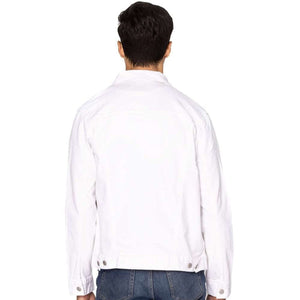
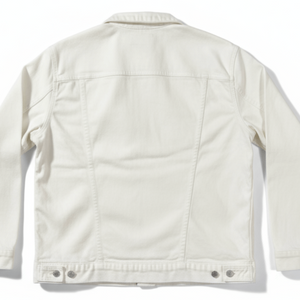
On white denim, clarity takes hold. The contrast between dark pattern and light center sharpens, and the text becomes immediately legible from a distance. The lotus shapes read more distinctly as individual forms, emphasizing the idea of many presences sharing space. The gold accents appear crisp and intentional. This clarity matters because it frames the message as an active choice rather than a reflection.
On black denim, the artwork becomes intimate and quiet. Much of the background pattern merges into the base, while the cream center and gold leaves emerge as focal points. The text feels closer, almost whispered. As the fabric folds, parts of the lotus pattern reappear and disappear, reinforcing the sensation of movement within closeness.
In every version, the truth remains embodied rather than explained: selfhood held gently inside density, space created without pushing anything away, and presence chosen even when surrounded.