A child riding a bicycle across bright green grass beside a turquoise body of water. a dark brown tree with a pink flowering canopy stands on the left, its petals drifting through the air. the sky transitions from soft yellow to pink, filled with white dots and floating marks suggesting pollen or light. the scene is rendered in loose, hand-drawn lines and textured washes. This artwork is titled “Bike Ride” by Canvas & Quotations (Monika Chugh and Alka Chopra)
You immediately see the pink of the tree — not as blossom detail, but as atmosphere. The canopy fills the upper left corner in a saturated rose tone, mottled with pale circles and soft flecks that float outward like petals, pollen, or light caught mid-fall. The trunk beneath is dark and simple, painted with thick, uneven strokes that anchor the color above without detailing it. The tree doesn’t describe a species; it describes a season.
Your eye moves right and finds the rider. A small figure pedals a bicycle across a field, drawn with thin, confident black lines that feel immediate and uncorrected. The wheels are circles without weight, the frame simplified to its idea rather than its mechanics. The rider wears a short yellow dress or tunic, its stripes indicated with quick strokes, and the head tilts forward slightly as if focused on motion rather than destination. On denim, these black lines would remain crisp while the surrounding color softens, making the figure feel etched into movement. It matters because the rider feels present without being fixed.
A shift in mood happens at the ground. The grass is a bright, electric green, layered with short vertical marks that suggest blades without defining them. The color is lively and slightly uneven, as if applied quickly and left to breathe. Beneath it runs a band of turquoise water, textured with small dots and curved white marks that echo the falling shapes in the sky. The water doesn’t reflect; it hums. On fabric, this turquoise would sink deeply into the weave, creating a calm weight beneath the brightness above. The emotional pulse settles into ease.
The sky transitions softly from warm yellow on the right into pink on the left, with no hard boundary. White dotted arcs and small curved marks drift through the air, some clustering, others spaced apart. These marks feel intentional but not controlled — like noticing something beautiful without stopping to name it. On denim, these light marks would catch first along raised ridges, appearing and disappearing as the fabric moves. They matter because they give the scene breath.
Nothing in the composition demands attention. There is no central monument, no dramatic horizon. The scene lives in passing — a ride taken, a moment noticed, then gone. The scale stays intimate. The child is small compared to the field and tree, but not overwhelmed by them.
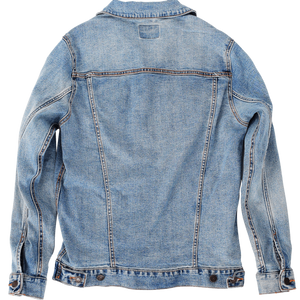
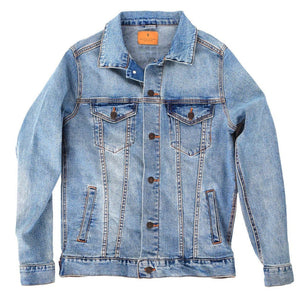
On stonewashed denim, the scene becomes memory. The pink canopy softens into a blush haze, the greens mellow, and the rider feels like a remembered afternoon rather than a specific place. The textures blur gently, and the floating white marks feel like time passing rather than petals falling.
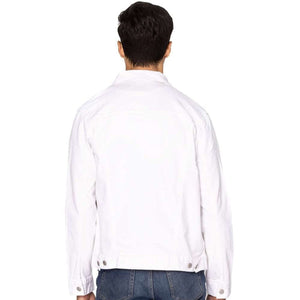
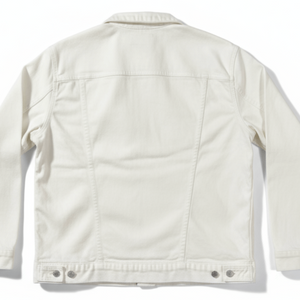
On white denim, clarity takes hold. The contrast sharpens between the black line figure and the color fields, making the rider’s movement more legible. The pink and yellow sky feels bright and open, and the grass becomes playful rather than soft. This clarity matters because it frames the scene as presence — here, now, noticed.
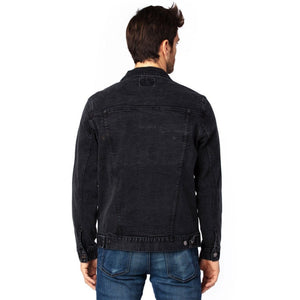
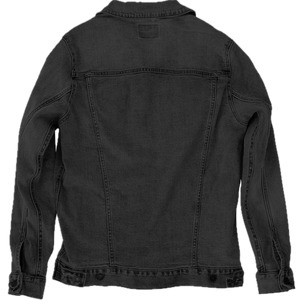
On black denim, the colors glow inward. The greens and pinks lift forward like illuminated chalk, while the black line drawing partially merges with the base, making the rider feel like motion emerging from darkness. The water deepens, grounding the scene.
In every version, the truth remains gentle and unforced: movement without urgency, color without explanation, and a moment that exists simply because someone chose to keep riding.