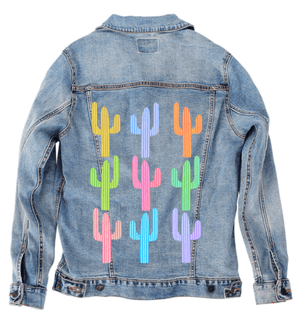
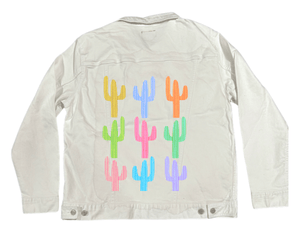
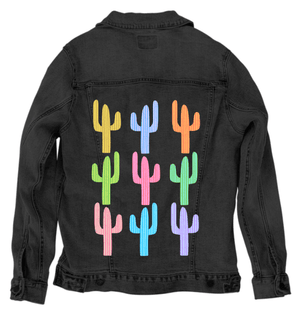
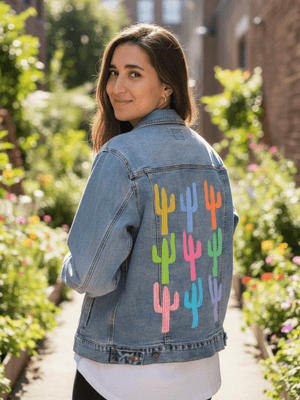
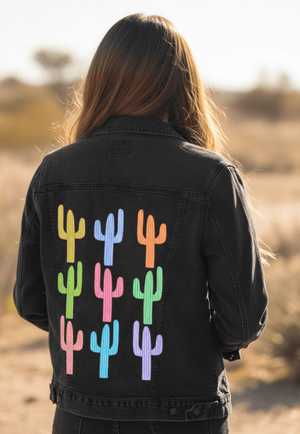
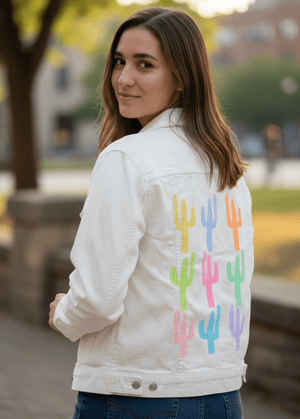
Nine stylized cactus shapes arranged in a loose grid on a transparent background. Each cactus has a simplified saguaro form with rounded arms and vertical bodies, filled with textured watercolor stripes. Colors vary across the grid, including mustard yellow, sky blue, coral orange, mint green, lime green, soft pink, turquoise, bright cyan, and lavender, with visible grain, speckling, and uneven pigment distribution throughout. This artwork is titled “Cactus Garden” and created by Hend Shehata
The first sensation comes from repetition. Nine cactus forms stand upright, evenly spaced but not rigid, each one a variation on the same silhouette. Rounded arms lift upward from thick central trunks, their curves soft rather than spiked. The shapes feel friendly, almost buoyant, with no sharp edges. Each cactus is filled with vertical striping — narrow, uneven bands of pigment that run from top to bottom, some darker, some lighter, revealing the watercolor’s movement and pause.
Color does the heavy lifting. Each cactus is rendered in a distinct hue, but none feel isolated. Warm yellows and oranges sit beside cool blues and greens, while pinks and purples soften the transitions between them. The pigment is visibly textured, with speckling and grain showing through, as if salt or dry brush has interrupted the wash. This texture gives the forms a tactile quality — you can almost feel the paper resisting the water.
The vertical striping introduces rhythm. Lines are not perfectly straight; they wobble slightly, thickening and thinning as the brush shifts. Some stripes bleed gently into one another, while others stop abruptly, leaving pale gaps. This creates a sense of motion held in place, as though the color is still settling. The cacti feel steady, but not static.
Negative space surrounds each form. The transparent background keeps the composition open, allowing each cactus to stand on its own without crowding. There is no ground line, no horizon — the shapes float, evenly balanced, creating a pattern that feels playful but intentional. The repetition becomes calming rather than monotonous.
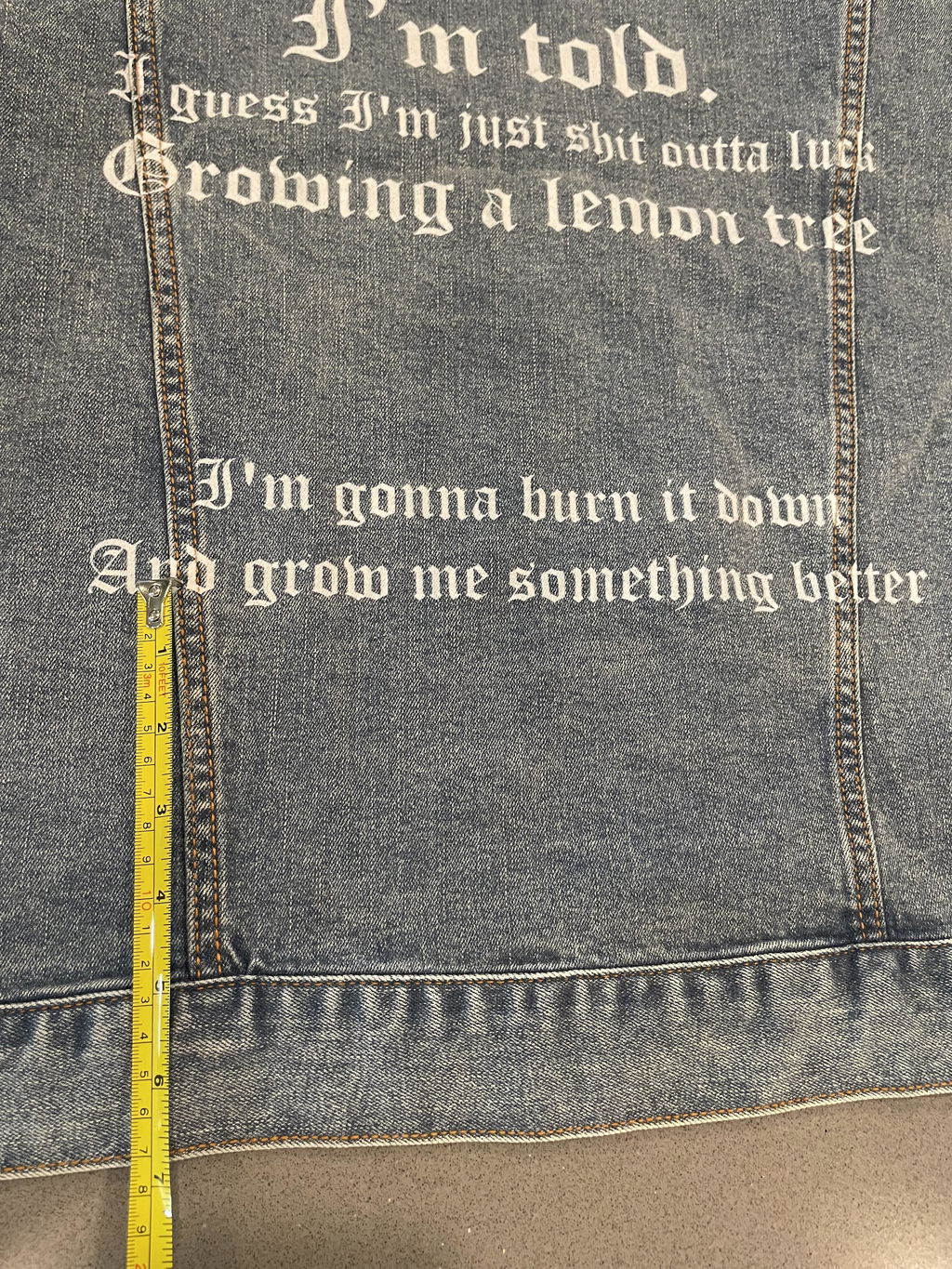
On stonewashed denim, the vertical stripes soften immediately. Pigment sinks into the worn twill, blurring the edges of each stripe and blending neighboring tones. The individual cacti feel less distinct, more like a collective impression.
The grain of the fabric amplifies the watercolor texture. Speckling merges with the denim’s own irregularities, giving the cacti a weathered, familiar presence. Emotionally, the piece shifts toward ease and comfort — cheerful, but mellowed.
Stonewashed denim makes the grid feel relaxed, like a memory of color rather than a bold display. The artwork feels lived-in, friendly, and quietly joyful.
On white denim, clarity takes over. Each cactus silhouette becomes crisp, and the vertical stripes read cleanly from top to bottom. The color separation sharpens, making the grid structure more apparent.
The texture remains visible, but it feels intentional rather than softened. Speckles and grain pop against the white base, giving each cactus character without noise. Emotionally, the piece becomes bright and playful, almost graphic.
White denim frames the artwork as fresh and expressive. The repetition feels celebratory, and the colors feel confident, like a cheerful declaration rather than a quiet pattern.
On black denim, the colors compress and intensify. Bright blues and greens glow vividly, while yellows and pinks deepen into richer tones. The vertical striping becomes more dramatic, with contrast heightened by the dark base.
The silhouettes feel bolder and more sculptural. Texture reads as depth rather than softness, and the grid feels more intentional and contained. Emotionally, the piece shifts toward intimacy and focus.
Black denim turns the cactus garden into a striking visual rhythm — playful, but grounded, with a sense of cohesion and quiet strength.
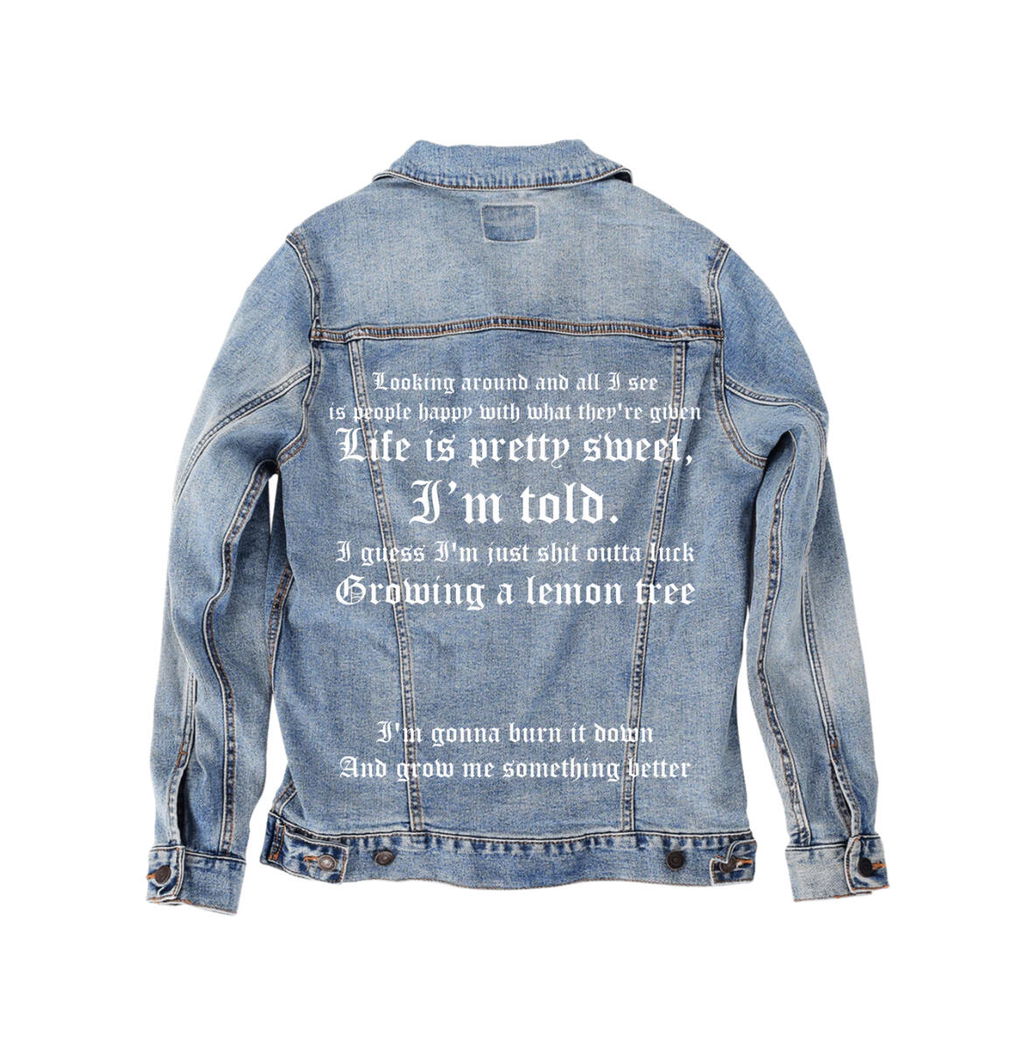
On classic blue denim, balance emerges. Cool-toned cacti harmonize naturally with the fabric, while warmer hues rise gently forward. Pigment settles evenly into the twill, preserving stripe detail while adding softness.
The repetition feels steady and wearable. Texture remains present but not overpowering, blending watercolor grain with denim weave. Emotionally, the artwork feels calm and optimistic.
Classic blue denim gives the piece a timeless quality. The cactus forms feel at home, their colors balanced and enduring, as though the pattern belongs naturally within the fabric itself.