illustration of a fluffy gray long-haired cat reclining with its tail curled
upward, holding a bright red vintage telephone receiver to its ear. the cat’s
fur is rendered in layered charcoal and silver tones with fine whisker lines
and golden-yellow eyes gazing forward. a matching red phone base and coiled
cord rest below against a pale pink background patterned with soft floral
silhouettes. this artwork is titled “Cat on the Phone” and created by Amelia
Legault
You drift first into the loose spiral of the red phone cord, its coils resting
in a soft arc beneath the cat’s foreleg. The composition opens diagonally, the
body stretched in repose rather than readiness, with the tail lifting upward in
a slow, confident curve. Nothing presses forward. The moment feels paused
mid-breath, as if the cat has answered the call without standing up, without
shifting its weight, without interrupting the calm already present.
Your eye moves instinctively to the fur, where
the brushwork begins to reveal its rhythm. Along the chest and flank, strokes
run in layered directions — some long and feathered, others shorter and
slightly thickened — creating a density that suggests depth rather than
outline. Just above the front paw, the fur gathers into a subtle ridge where
pale silver overlaps charcoal gray. That ridge is not perfectly smooth; its
edge softens where pigment lightens, signaling a transition rather than a
boundary. It matters because the body feels dimensional and lived-in, not posed
— a creature fully occupying its own comfort.
A shift in mood happens when you reach the
eyes. They are warm yellow, ringed with darker outlines that hold the gaze
steady without sharpening it. One eye sits imperceptibly higher than the other,
enough to break symmetry but not enough to feel accidental. That slight
imbalance gives the expression humor and awareness, a sense of listening
without urgency. You can almost hear the silence on the other end of the line —
not empty, just patient.
Then comes a new kind of quiet in the tail.
Its striped bands darken toward the tip, each stripe softly blended rather than
crisply defined. The curve rises gently upward, not stiff or alert, but relaxed
— a gesture of ease rather than readiness. The brush direction follows the arc,
reinforcing the sense of slow movement held in place. It feels like a stretch
paused halfway through, motion suspended because there is no reason to rush.
Color becomes emotion in the telephone itself.
The red receiver is rendered with smoother, more even pigment than the fur,
flattening its surface just enough to distinguish it as manufactured and solid.
The cat’s paw rests over it loosely, claws hidden, pressure implied only by
placement. The coiled cord repeats its loops below, each turn consistent, each
shadow tucked beneath the curve. That repetition creates a visual hum — a
rhythm you can almost hear, like the low presence of a dial tone continuing quietly.
Behind everything, the pale pink background
carries faint floral silhouettes that hover rather than assert themselves.
Their edges dissolve into the field, never competing with the cat or the phone.
They feel atmospheric, like wallpaper remembered rather than seen directly,
reinforcing that this scene exists indoors, in leisure, in a space where time
stretches comfortably.
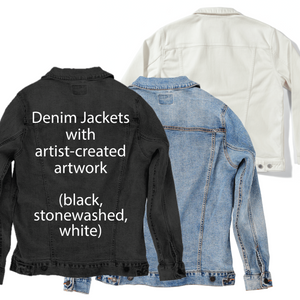
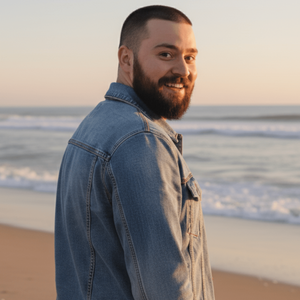
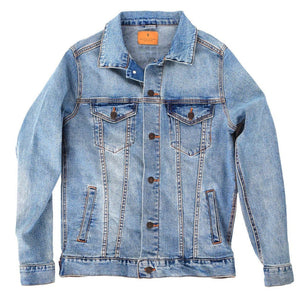
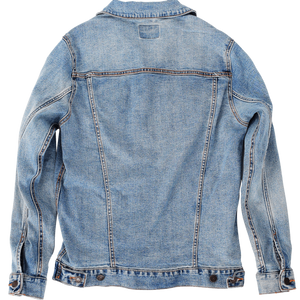
When this artwork lives on stonewashed denim,
the fur becomes softer and more diffuse. The layered strokes along the chest
and tail sink into the weave, allowing pigment to spread gently along the
twill’s valleys. The ridge where silver overlaps charcoal loosens, its edge
feathered further by the fabric’s grain. As the jacket moves, light shifts
unevenly across those softened textures, giving the cat a breathing quality —
as if its calm expands and contracts with the wearer’s motion. The stonewash
absorbs the background florals until they feel like air rather than pattern,
deepening the sense of quiet ease.
On stonewash, the red telephone loses a hint
of sharpness, warming slightly as pigment settles into the denim’s worn
surface. The cord’s loops remain visible, but their shadows soften, creating a
slower rhythm. The overall effect feels familiar and lived-in, like a favorite
room at the end of the day. The artwork reads as comfort carried outward — not
displayed, but worn.
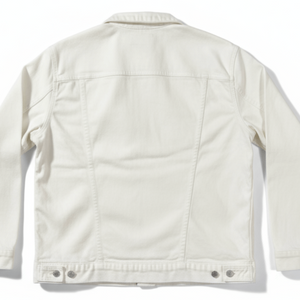
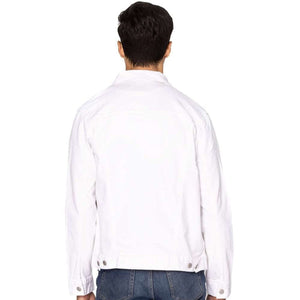
On white denim, everything sharpens. The fine
outlines around the eyes become crisp, and the slight asymmetry in their
placement becomes more noticeable, lending the expression a brighter wit.
Individual fur strokes separate cleanly, especially along the chest where pale
strands stand out against the white base. The ridge of overlapping pigment
becomes more defined, catching light directly. This clarity matters because it
shifts the mood toward playfulness and charm — the humor of the scene steps
forward.
The red telephone on white denim becomes
graphic and bold. Its smooth fill contrasts strongly with the textured fur, and
the cord’s repetition reads almost musical, each loop distinct. As the jacket
moves, the red holds steady while the white reflects light, giving the
impression that the call itself is constant while everything else drifts gently
around it. The artwork feels bright, conversational, and lightly mischievous.
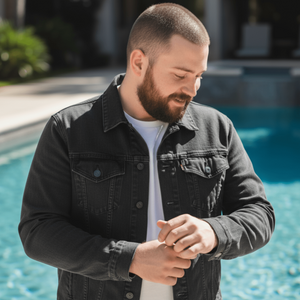
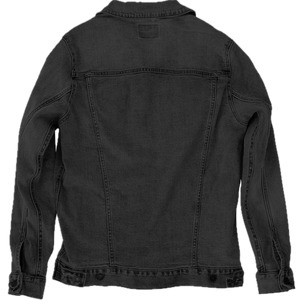
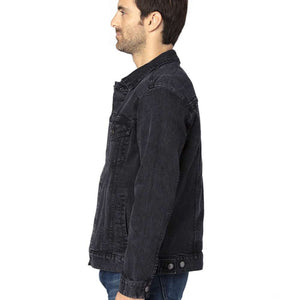
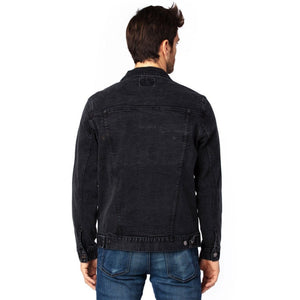
On black denim, the scene turns inward. The
gray fur deepens into velvety layers, with lighter strokes glowing softly
against the dark base rather than standing apart. The tail’s stripes compress
visually, becoming richer and more intimate. The ridge along the chest feels
denser here, its shadow deepened by the surrounding darkness. This compression
matters because it draws the viewer closer — the artwork no longer reads from
across the room, but invites proximity.
The red telephone on black denim becomes the
emotional anchor. Its color lifts forward dramatically, almost luminous, while
the cord traces its loops like a quiet signal cutting through the dark. As the
jacket bends and folds, the red shifts with it, catching light and then
slipping back into shadow. The moment feels private here — like a late-night
call taken softly, lights low, voice calm — a scene carried close to the body,
held rather than shown.