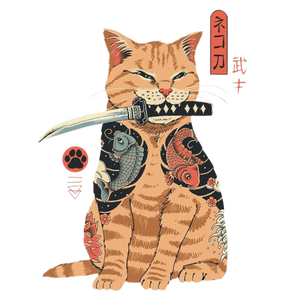
An orange tabby cat seated upright facing forward, gripping a curved katana in its mouth. The cat has narrowed eyes, a pink nose, white whiskers, and short striped fur. Both forelegs are covered in tattoo-style sleeves showing a blue koi fish on one side and a red koi fish on the other, with waves, blossoms, and black backgrounds. Red Japanese characters and symbols appear beside the cat, including a vertical sign and a paw-print emblem. The background is solid black. This artwork is titled “Catana” and created by Vincent Trinidad
We glance into the cat’s face, because the expression carries the weight of the scene. The cat sits squarely, body centered, head lifted just enough to meet the viewer directly. Its eyes are narrowed into a focused squint, lids angled downward at the outer corners, creating a look of calm resolve rather than aggression. The fur is short and neatly patterned, warm orange with darker tabby striping that follows the contours of the cheeks, forehead, and neck. The pink nose sits centered, slightly darker at the edges, while white whiskers extend outward in fine arcs, cutting clean lines against the black background.
The katana becomes the next anchor. Held firmly in the cat’s mouth, the blade curves gently to the left, polished silver with a subtle gradient that suggests reflected light. The hilt is wrapped in a black-and-cream diamond pattern, compressed slightly by the cat’s bite, emphasizing tension and control. The blade’s tip extends past the left edge of the torso, creating a diagonal counterpoint to the cat’s upright posture. Nothing wavers. The grip feels intentional and steady.
Then your attention drops to the body, where skin becomes story. Both forelegs are wrapped in dense tattoo-style imagery, rendered as full sleeves against a dark background. On one leg, a blue koi fish curves upward, scales layered and outlined, fins flowing in soft arcs. On the other, a red koi mirrors the motion, its body warmer and heavier in tone. Surrounding both are stylized waves, floral blossoms, and swirling accents that wrap naturally around the cat’s anatomy. The tattoos follow the bend of the legs, compressing near joints and stretching across the upper limbs, reinforcing that these images belong to the body rather than sitting on top of it.
A shift in rhythm happens when you notice the symbols around the figure. To the right, a vertical red placard with Japanese characters stands tall, its edges slightly worn, surface textured like painted wood or stamped paper. Smaller red characters sit nearby, floating cleanly against the black. On the left side of the composition, a red paw-print emblem appears above a small geometric mark, balancing the vertical weight of the signage on the opposite side.
The cat’s posture remains composed throughout. The back is straight, the hind legs tucked neatly beneath, paws planted symmetrically. The tail curves around the base, partially visible, reinforcing stillness rather than motion. The entire figure reads as contained and disciplined — power held inward.
The background is absolute black. No ground, no horizon, no environment. This isolation elevates the cat into an emblem rather than a scene, forcing attention onto form, symbolism, and restraint. Every color choice — orange fur, red and blue koi, silver blade — is sharpened by the absence of distraction.
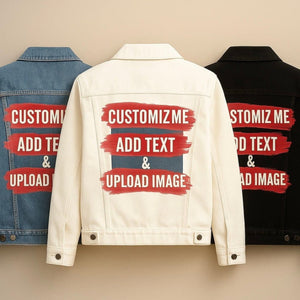
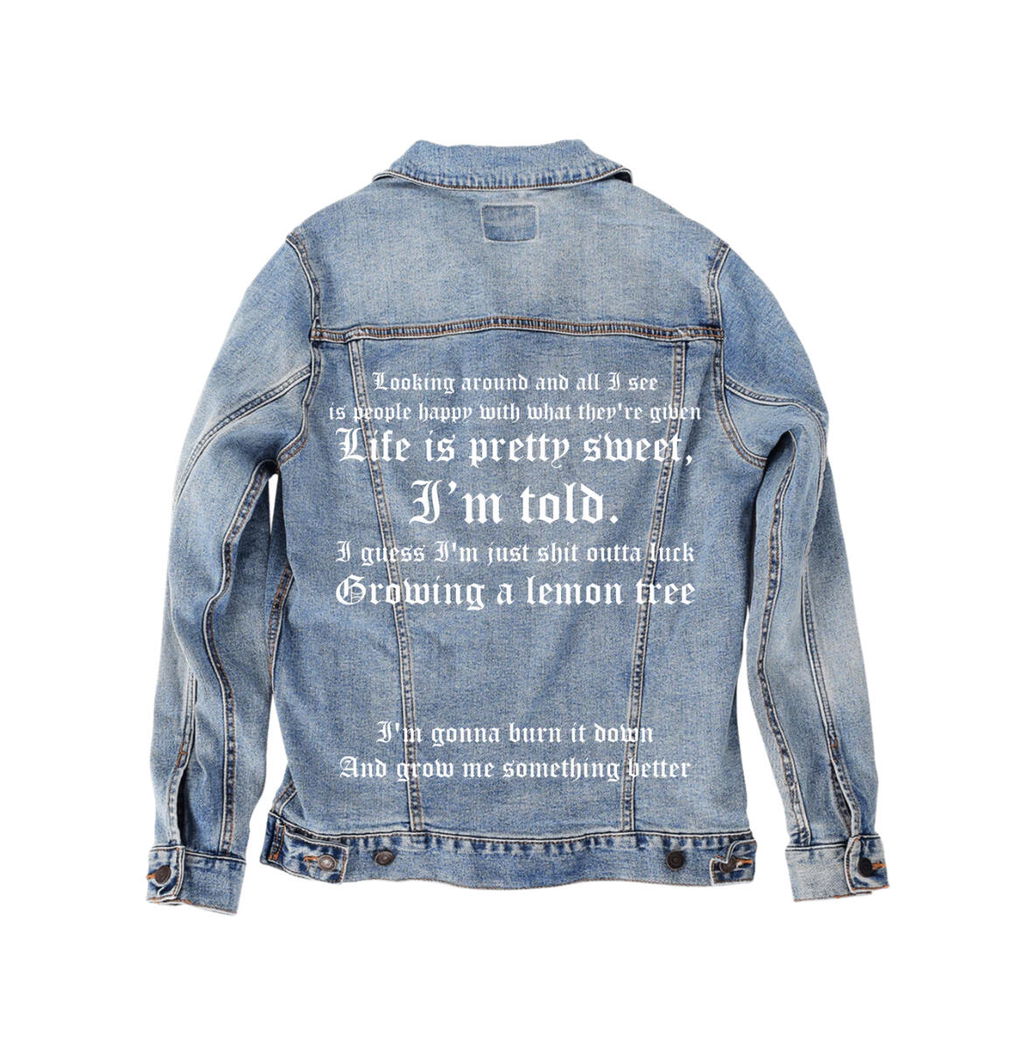
On stonewashed denim, the image softens into something seasoned. The orange fur warms and blends into the worn twill, striping becoming gentler and more organic. The tattoo colors deepen into richer, earthier reds and blues, their outlines softening slightly as pigment sinks into the fabric grain.
The katana’s shine dulls just enough to feel aged rather than sharp. The red characters lose a bit of edge clarity, reading more like stamped marks than signage. Emotionally, the piece shifts toward legacy — a warrior identity carried over time, not freshly declared.
Stonewashed denim makes Catana feel lived-in and storied, like discipline practiced quietly rather than displayed.
On white denim, clarity takes control. The fur striping becomes crisp, each band clearly defined. The koi tattoos pop vividly, blue and red separating cleanly from their black backgrounds. Scale patterns and wave details become easy to trace with the eye.
The katana reads sharp and clean, its curve precise. Red characters stand bold and graphic, anchoring the composition. Emotionally, white denim presents the artwork as confident and declarative — a clean statement of control, balance, and presence.
On black denim, the image becomes intimate and formidable. The background disappears entirely, causing the cat’s orange fur, the silver blade, and the koi tattoos to glow forward. Reds intensify, blues deepen, and the blade feels suspended in shadow.
The eyes become the focal point — narrow, unreadable, unwavering. Emotionally, black denim transformsCatanainto a quiet icon of restraint and power, where softness and danger coexist, held close against darkness with no need for motion or explanation