Two
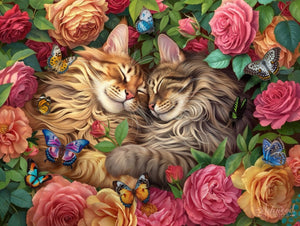
long-haired cats resting cheek to cheek with eyes closed, nestled among dense
blooming roses in shades of blush pink, coral, peach, and soft yellow. their
flowing fur is rendered in warm golden and cool gray tones, blending gently at
the center where their faces meet. Colorful butterflies in blue, orange,
yellow, and black flutter throughout the foliage, with layered green leaves
filling the background. this artwork is titled “Cats in Love” and created by
Brigid Ashwood
You
drift first into the meeting point of their faces, where two closed eyes rest
in perfect alignment and the space between them disappears. The cats press
gently together, cheek to cheek, whiskers overlapping, their expressions
softened into complete surrender. There is no tension in their bodies — only
the quiet gravity of closeness. Around them, roses bloom outward in every
direction, forming a cradle of color that feels protective rather than
decorative.
Your
eye follows the fur where the two bodies meet. The left cat’s coat flows in
warm honey and copper tones, long strokes sweeping outward from the face like
breath released slowly. The right cat’s fur cools into silvery gray and soft
taupe, its strands slightly denser, curling inward toward the shared center. At
the seam where their fur overlaps, pigment thickens subtly, creating a faint
ridge of texture — a visible truth of contact. On denim, this ridge settles
into the twill and fractures into delicate shifts of light and shadow. It
matters because the connection becomes tactile — not just seen, but felt.
A
shift in mood happens as you move outward from the cats into the roses. Each
bloom is layered with intention: petals curl inward at the center, then open
outward in softer, broader strokes. The pinks deepen toward rose and coral,
while peaches and pale yellows glow quietly at the edges. Brush direction
follows the natural spiral of each flower, reinforcing a sense of unfolding
rather than explosion. On fabric, these layered petals interact with the weave,
softening their edges and giving the blooms a velvety depth. The roses feel
abundant but calm — love expressed through fullness, not urgency.
Then
comes a new kind of motion in the butterflies. They hover and rest throughout
the composition, wings spread in varied patterns of blue, orange, black, and
cream. Some appear mid-flutter, others pause against petals or leaves. The wing
markings are crisp at the edges and denser near the centers, where pigment
pools slightly. On denim, those dense centers sink into the grain, while
lighter wing edges lift, creating a subtle illusion of movement when the fabric
shifts. The butterflies matter because they introduce breath — small, living
pauses that animate the stillness without disturbing it.
The
leaves knit everything together. Greens range from deep forest to soft sage,
layered behind and between blooms. Veins are suggested rather than outlined,
guiding the eye gently rather than directing it sharply. The foliage creates
depth without enclosure, allowing the cats to remain the emotional core while
being fully supported by their surroundings.
Color
becomes emotion in the harmony between warm and cool. The golden cat and the
gray cat balance one another, neither dominating, neither receding. Their fur
mirrors the roses — warmth and softness intertwined — creating a visual echo
that reinforces unity. The entire scene feels hushed, like a moment held just
before sleep.
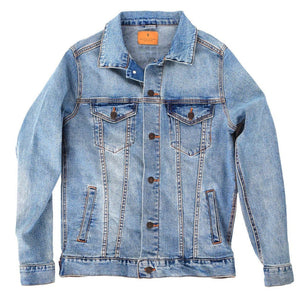
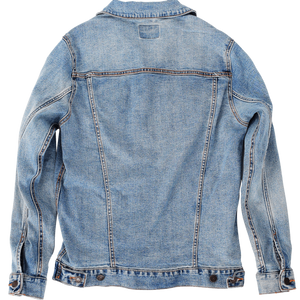
When
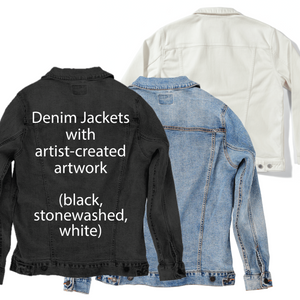
this artwork lives on stonewashed denim, the fur softens immediately. The
overlapping strokes where the cats meet blur gently into the worn grain, making
the shared center feel even more intimate. The roses lose a hint of sharpness,
their petals spreading slightly into the fabric’s texture. As the jacket moves,
light breaks unevenly across the blooms and fur, giving the scene a breathing
quality — love that feels lived-in and enduring.
On
stonewash, the butterflies mellow into the composition, their colors diffusing
just enough to feel embedded rather than floating. The overall mood becomes
nostalgic and tender, like a memory revisited often.
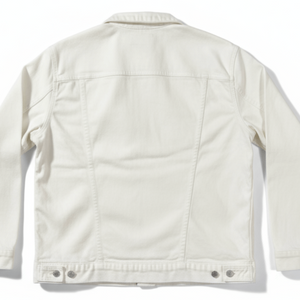
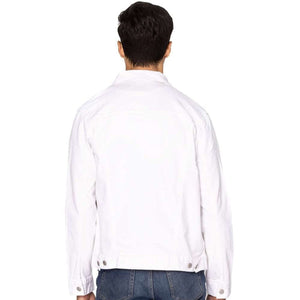
On
white denim, clarity emerges. Individual fur strands separate cleanly,
especially along the cats’ cheeks and chests, making the contrast between warm
gold and cool gray more pronounced. The roses brighten, their layered petals
easy to trace. Butterflies become crisp focal accents, their patterns reading
clearly. This clarity matters because it frames love as present and awake —
gentle, but fully conscious.
The
foliage on white denim feels fresh and luminous, creating a sense of garden
light. As the jacket shifts, contrast holds steady, giving the artwork an open,
joyful presence.
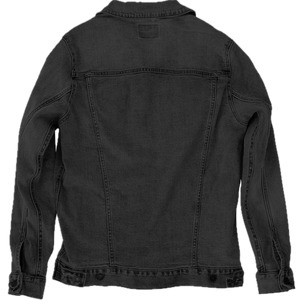
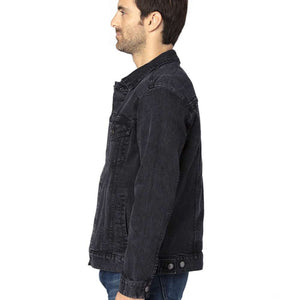
On
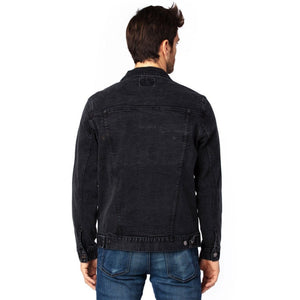
black denim, the scene deepens and quiets. The cats’ fur compresses into rich,
velvety tones, with highlights glowing softly against the dark base. The roses
become lush pockets of color, their centers pulling the eye inward. Butterflies
glow like small embers against shadow, appearing and disappearing as the fabric
folds.
On
black denim, the artwork feels intimate and protective — love carried close to
the body. The darkness intensifies the tenderness, turning the image into an
emblem of closeness, rest, and devotion held in stillness.