A
deep indigo-black long-haired cat lying calmly in the foreground with luminous
blue-violet eyes and a silver triquetra pendant at its chest. behind the cat is
a circular Celtic knot design in layered lavender, violet, and blue tones,
featuring interlaced triquetra forms and animal motifs arranged symmetrically
around a central triskelion. a soft halo glow surrounds the symbol on a pale
background. this artwork is titled “Celtic Black Fluffy Cat” and created by
Brigid Ashwood
You
drift first into the cat’s gaze — two luminous eyes set low and steady,
catching light like polished glass held just above shadow. The body rests fully
grounded, forepaws tucked and tail fanned softly to the side, fur pooling
outward in dense, velvety layers. There is no tension in the pose. The cat does
not watch — it holds space. Behind it, the circular Celtic form rises
like a moon carved from light, suspended and deliberate, never touching the
body yet clearly bound to it.
Your
eye moves instinctively to the fur. The coat is not a single black, but a deep
spectrum of indigo, violet, and midnight blue, brushed in long, directional
strokes that follow the curve of the body. Near the chest and paws, the strokes
shorten and thicken, building density where weight meets ground. Along the
flank, pigment thins slightly, allowing cooler blue undertones to surface. At
the edges of the fur, a faint violet glow lifts the silhouette away from the
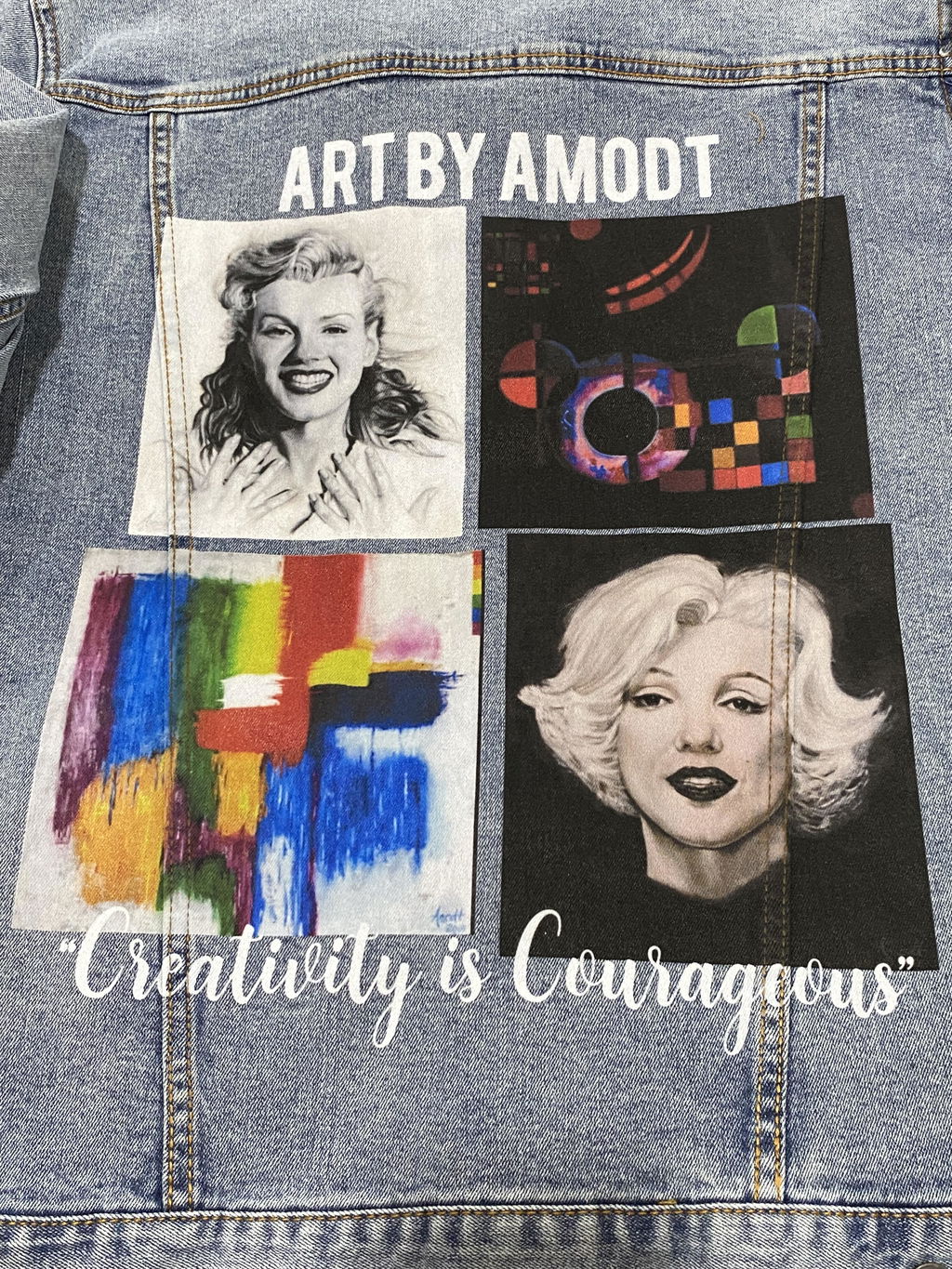
background. On denim, those edge highlights settle into the twill and fracture
gently, making the fur feel less illustrated and more touchable. It
matters because the cat reads as physically present — a guardian anchored in
cloth, not an image floating above it.
A
shift in mood happens at the pendant. The small silver triquetra hangs at the
center of the chest, its three looping arms interwoven with precise over-under
logic. The metal is rendered smoother than the fur, with clean highlights along
its curves and a subtle vertical drop below, like a suspended breath. On
fabric, the crisp edges of the knot catch light differently than the
surrounding fur, sharpening its geometry. The contrast matters — the symbol
becomes intentional, chosen, worn, not merely decorative.
Then
comes the circle behind the cat, and this is where the eye slows down. The
outer ring is built from continuous interlaced bands, each strand crossing and
re-crossing with disciplined consistency. You can trace a single line as it
passes over, then under, then over again, without ever breaking — a true knot,
not a pattern shortcut. Small circular nodes punctuate the ring at intervals,
glowing softly like embedded stones. Inside the circle, animal forms emerge
from the knotwork itself: stylized creatures defined not by outline, but by
negative space created where bands loop and turn. Their bodies are readable
only because the interlace obeys structure. On denim, these crossings deepen as
pigment sinks into the weave, and the over-under hierarchy becomes tactile —
the illusion of carving rather than drawing. It matters because the knotwork
asserts authority: this is craft, lineage, and control of chaos made visible.
At
the center sits a triskelion, three spiraling arms turning inward, rendered in
warmer lavender-pink tones that pulse subtly against the cooler blues around
it. The spirals tighten toward their cores, with pigment thickening at the
turns before releasing outward. On fabric, these tight curves catch the raised
ridges of denim first, creating tiny points of emphasis that shift as the
jacket moves. The center feels alive — not moving, but capable of motion
— like energy held in reserve.
Color
becomes emotion in the way cool and warm tones negotiate space. The cat’s deep
blues echo the darker knot bands, while the lavender and violet highlights
bridge fur and symbol into a single field. Nothing competes. Everything
belongs. The pale halo around the circle is not blank; it’s a controlled glow
that gives the entire piece breath, separating the sacred geometry from the
world beyond it.
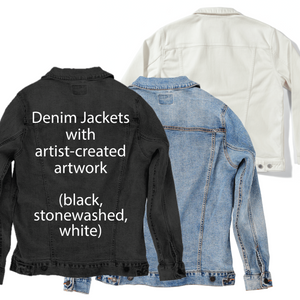
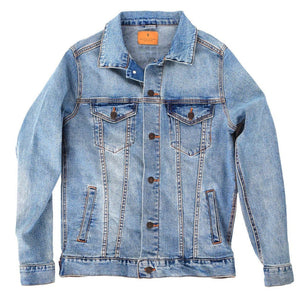
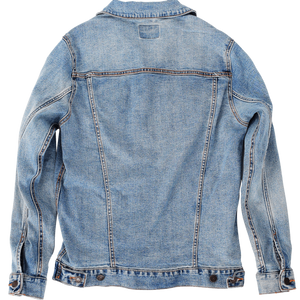
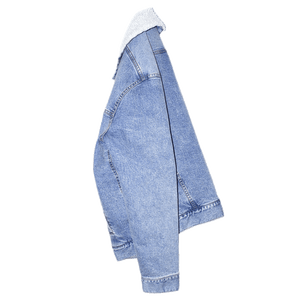
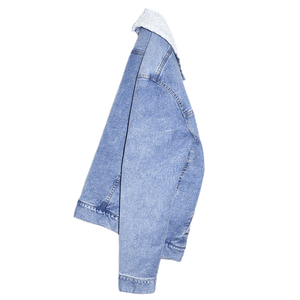
When
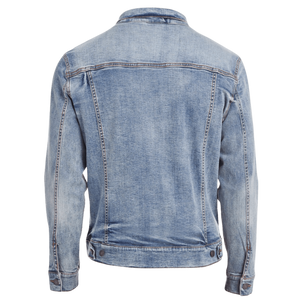
this artwork lives on stonewashed denim, the fur softens dramatically. The
dense indigo strokes spread into the worn grain, and the violet edge glow
blooms outward, making the cat feel even more embodied. The knotwork behind it
loosens slightly — not losing clarity, but gaining atmosphere — as the
over-under crossings become textured rather than crisp. As the jacket moves,
light breaks unevenly across the circle, and the triskelion’s spirals seem to
breathe. The emotional tone shifts toward protection and familiarity —
something ancient carried daily.
On
stonewash, the pendant dulls just enough to feel worn, like metal warmed by
skin over time. The whole piece reads as talismanic rather than ornamental.
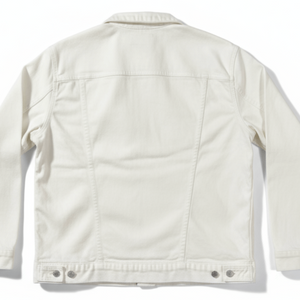
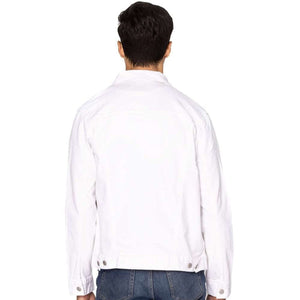
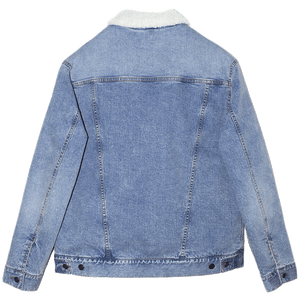
On
white denim, clarity asserts itself. Every strand of knotwork becomes legible,
every crossing precise. The animal forms within the circle are easiest to read
here, their shapes emerging cleanly from the interlace. The cat’s fur separates
into visible layers, and the blue-violet eyes intensify, becoming unmistakable
focal points. This clarity matters because it frames the image as deliberate
symbolism — presence claimed openly, not quietly.
The
triskelion glows brighter on white, its spiral logic unmistakable. As the
jacket moves, contrast holds firm, giving the artwork a declarative, ceremonial
presence.
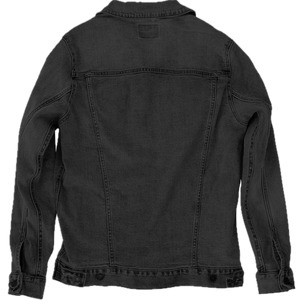
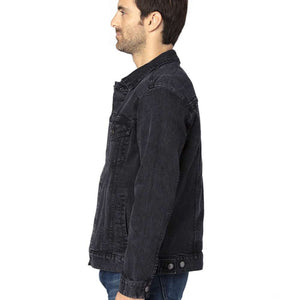
On
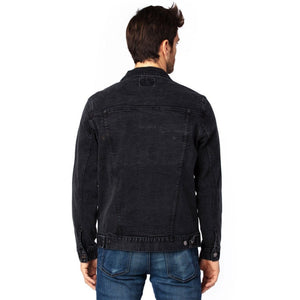
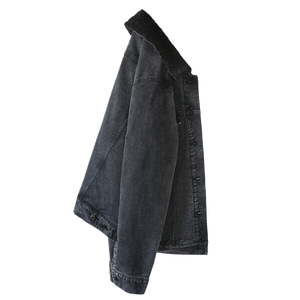
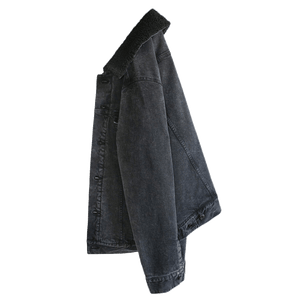
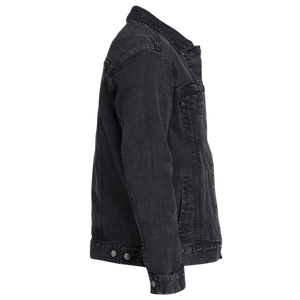
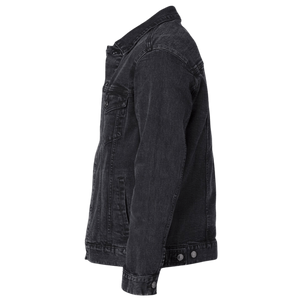
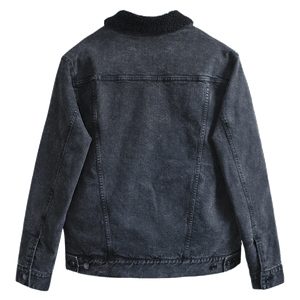
black denim, the piece turns inward and powerful. The cat’s body nearly merges
with the base, its highlights and eyes becoming the primary points of
visibility. The knot circle lifts forward as a luminous architecture, its
lavender and blue lines glowing against the dark field. Over-under crossings
feel carved, not drawn, and the central triskelion reads like contained fire.
The
pendant flashes briefly as fabric folds, then disappears again, like a secret
revealed only in motion. On black denim, the artwork feels protective and
sovereign — a guardian bound to symbol, symbol bound to wearer. It is no longer
just seen. It is kept.