Illustration of two realistic
dolphins leaping through splashing water in the foreground, set against a
detailed teal Celtic knotwork mandala that incorporates of three dolphins
intertwined within a circular Celtic knot design rendered in layered teal,
aqua, and deep blue tones. each dolphin is formed from continuous
over-and-under knot strands, their bodies curving in a triadic rotation around
the center of the circle. this artwork is titled “Celtic Dolphin” and created
by Brigid Ashwood
You
drift first into the turning motion of the water, where two dolphins rise and
arc through pale blue spray, their bodies caught mid-leap. One lifts higher,
chest angled upward, while the other curves lower and forward, their movements
staggered but clearly related — a shared rhythm rather than a mirrored one. The
splashes curl outward in soft, translucent whites, framing the dolphins without
overpowering them. The moment feels alive and kinetic, as if the surface of the
sea has just broken open to let them breathe.
Your
eye is then pulled backward, deeper, into the Celtic circle that holds the real
weight of the piece. Interwoven within the knot are three dolphins, each
one formed entirely from continuous, unbroken strands. They are not outlined
figures — they exist because the knot turns into them. One dolphin occupies the
upper arc of the circle, its head angled downward, body curling inward as the
knot loops around its spine. The second dolphin emerges along the lower left
curve, its form defined by tighter, more compact crossings that suggest a turn
of the body. The third completes the triad on the lower right, its back and
tail shaped by wider arcs that open before folding back into the interlace. You
can literally follow each dolphin’s body by tracing a single strand as it
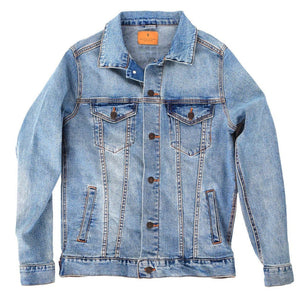
passes over, then under, then over again, never breaking. On denim, these
crossings settle into the twill, and the over-under logic becomes tactile — the
dolphins feel carved rather than drawn. It matters because the symbol reads as
intentional balance: three bodies, one continuous system.
A
shift in mood happens when you notice how the three intertwined dolphins rotate
around the center of the circle. Their placement forms a triangular flow, each
one turning toward the next, creating perpetual motion without chaos. The knot
tightens at the center, where curves compress and lines cross more frequently,
then releases outward along the dolphins’ backs. Pigment deepens at these tight
turns, especially where teal shifts into deeper blue, marking moments of
tension and release. On fabric, these denser areas catch light first, so the
rotation becomes visible as the jacket moves. The knot doesn’t spin — it holds
motion.
Then
comes a new kind of contrast when your eye returns to the foreground dolphins.
Unlike the intertwined forms, these are smooth and dimensional, their bodies
rendered with soft gradients and subtle highlights. The snouts are rounded, the
dorsal fins clean, the tails slightly blurred by motion. They are not symbolic
— they are present, physical, and immediate. The separation between them and
the knot is clear: these dolphins move through water, while the three within
the circle move through meaning. That distinction matters because the artwork
doesn’t confuse myth with reality — it lets them coexist.
Color
becomes emotion in the blues themselves. The knotwork leans toward teal and
turquoise, cool and luminous, while the dolphins in front deepen into gray-blue
tones that feel weighted and real. White spray bridges the two spaces, acting
like breath between worlds. The pale background keeps everything open, allowing
the circle to glow without enclosing the scene.
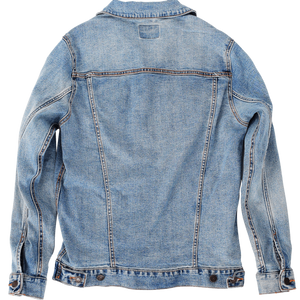
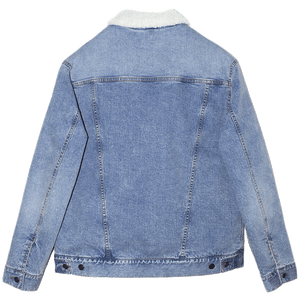
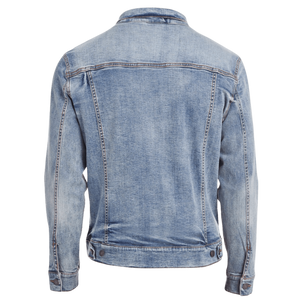
When
this artwork lives on stonewashed denim, the knot softens first. The over-under
crossings blur slightly as pigment spreads into the worn grain, but the three
dolphins remain readable because their bodies are defined by structure, not
line. The rotational flow becomes more atmospheric, like currents beneath the
surface. As the jacket moves, the tight crossings flicker gently, and the
circle feels alive — ancient motion carried forward.
On
stonewash, the foreground dolphins mellow as well. Their highlights soften, and
the water spray embeds into the fabric, making the leap feel remembered rather
than frozen. The emotional tone shifts toward harmony and continuity — movement
that has always existed.
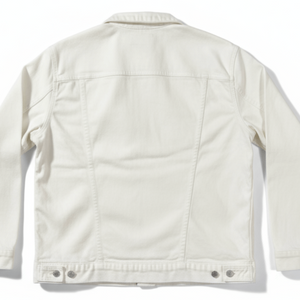
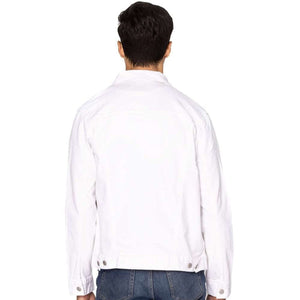
On
white denim, clarity asserts itself. The three intertwined dolphins are easiest
to count and trace here, each body cleanly legible within the knot. The
over-under logic becomes crisp, and the triangular rotation is unmistakable.
The foreground dolphins brighten, their forms sharp against the base, and the
splash reads as light rather than mist. This clarity matters because it frames
the artwork as intentional design — balance made visible.
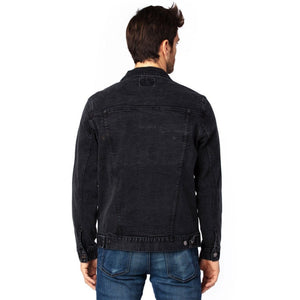
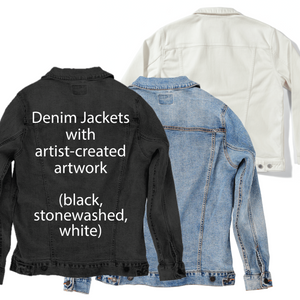
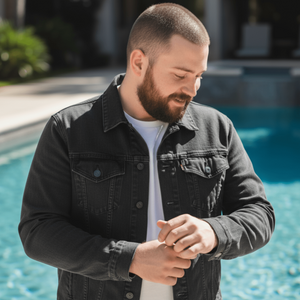
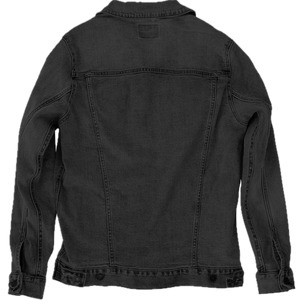
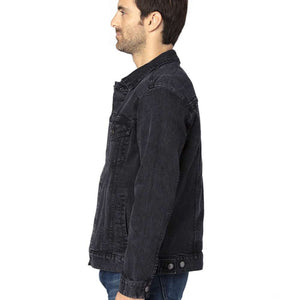
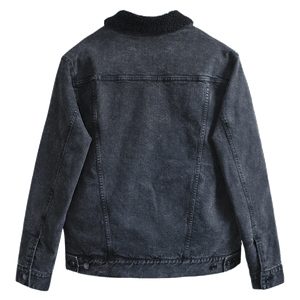
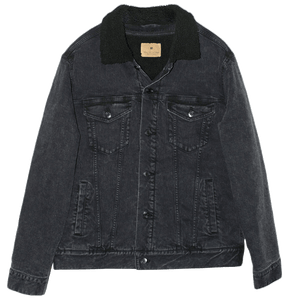
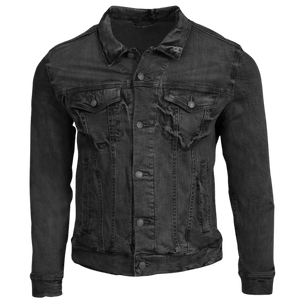
On
black denim, the piece turns powerful and ceremonial. The knot glows in layered
aqua and teal against the dark base, and the three dolphins within it feel
deeper, more sculptural, as if cut into shadowed stone. The foreground dolphins
lift forward dramatically, their bodies catching light while the water flashes
white. As the fabric folds, the knot’s crossings appear and disappear, and the
three intertwined dolphins seem to move in slow rotation.
On
black denim, the artwork feels like a sigil of unity and flow — three
dolphins bound into one system, worn close, carrying the rhythm of water,
motion, and balance with the body.