Illustration of two realistic brown hares in tall green
grass set before a circular green Celtic knot mandala. the knotwork forms three
intertwined hare figures using continuous over-and-under bands and spiral
motifs, glowing softly against a white background. one hare sits upright with
long ears and an amber eye, while the other crouches low mid-step. Detailed fur
textures contrast with the layered, symbolic knot design. this artwork is
titled “Celtic Hare” and created by artist Brigid Ashwood
You
drift first into the alert stillness of the upright hare, its long ears rising
like antennae into the air, catching every imagined sound. The eye is bright
and round, set forward with a watchful clarity, while the fur shifts from warm
chestnut to tawny gold along the throat and cheek. Below it, a second hare
stretches low across the grass, body elongated in a poised, mid-step
crouch—muscles held in readiness, not panic. The grass itself gathers in dark
green blades and clustered strokes, grounding both animals in earth and
edge-of-field quiet.
Then
the eye is pulled back into the Celtic knot, and here the story tightens into
structure. Intertwined within the knotwork are three hares, and they are
unmistakably hares—ears, long bodies, and leaping silhouettes formed directly
from the knot’s shapes. One hare appears at the top center of the
circle, shown in profile with a clear head and upright ear shape, its body
filled with swirling internal lines that echo the larger interlace. A second
hare occupies the lower left section, angled diagonally as if mid-leap,
its long body and ear outline defined by the negative spaces created where
thick green bands loop and cross. The third hare sits in the lower right
section, completing the triad; its form mirrors the same visual language—ears
extended, body stretched—so the three create a rotational rhythm around the
center. You can literally see where the knot bands pass “over” then “under”
around each hare shape, with edges darkening at the dips and lightening along
the raised curves. On denim, those crossings sink into the twill valleys and
catch on the ridges, turning the hares into something that feels embossed—like
the symbol has been pressed into cloth. It matters because the hares aren’t
merely depicted; they’re bound into the weave of the design.
A
shift in mood happens when you compare the two layers: the knot-hares feel like
myth and pattern—clean, graphic, governed—while the two painted hares in front
feel immediate and alive. The upright hare’s fur is rendered with soft,
directional strokes that follow the curve of its chest and neck; the brown
tones deepen at the shadowed underside, then lift into golden highlights along
the cheek and ear edge. The crouched hare carries smoother gradients along its
back and haunch, the body lengthened into a runner’s line. On denim, these fur
transitions behave differently than the knotwork: the painted highlights break
across the weave and become tactile, especially along the cheek and shoulder
where pigment density changes. The emotional pulse lands there—watchfulness you
can almost feel under your fingertips, vigilance carried quietly.
Color
becomes emotion in the greens behind them. The knot circle is built from thick,
dark green bands with a soft glowing field inside, the edges slightly blurred
into a halo. The green is not decorative; it’s protective—like a hedge or
woodland shadow holding the hares in place. Inside the circle, spiral motifs
repeat, echoing the curve of hare bodies and the loops of the knot. The design
feels like motion held inside boundaries: the instinct to flee, shaped into
symbol.
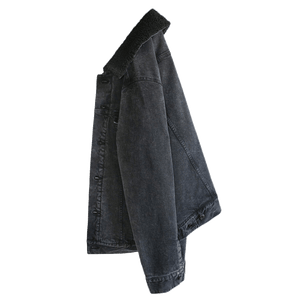
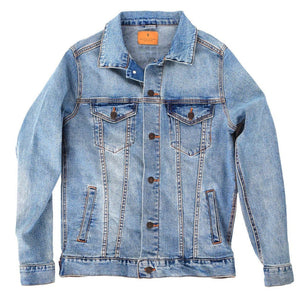
On
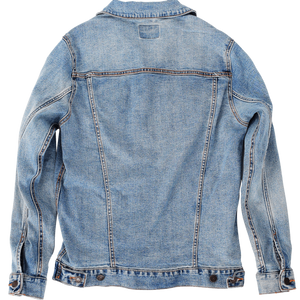
stonewashed denim, the knot becomes atmospheric first. The inner green
glow spreads gently into the worn grain, softening the hard edges of the
interlace. The three intertwined hares remain readable because their
silhouettes are defined by bold bands and clear ear shapes, but the over-under
crossings feel older, more weathered—like carved stone softened by time. The
painted hares in front mellow too; fur highlights soften, and the grass embeds
into the fabric, becoming less “blade-like” and more like dark texture. As the
jacket moves, light catches unevenly along the hares’ backs, giving the sense
that readiness lives in the cloth.
Stonewash
shifts the emotional tone toward folklore—quiet protection, field-magic, the
feeling of being watched over while moving through the world.
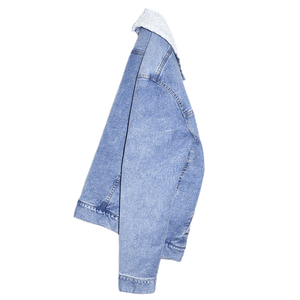
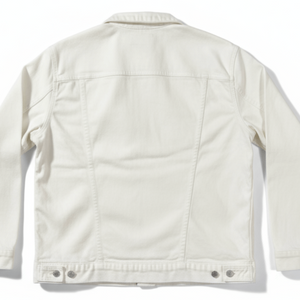
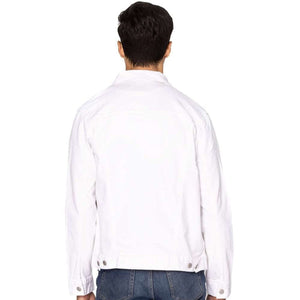
On
white denim, everything clarifies. The knot’s over-under logic becomes
crisp and graphic, and the three intertwined hares are easiest to count
and trace—each one cleanly separated by the negative space inside the circle.
The greens brighten and feel fresh, and the painted hares in front become
sharply detailed: the upright hare’s amber eye stands out, ear edges read
clean, and the crouched hare’s body line feels swift and precise. The grass
turns brighter and more defined. This clarity matters because it frames the
artwork as a declaration—alertness made visible, instinct honored openly.
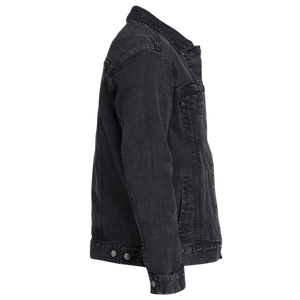
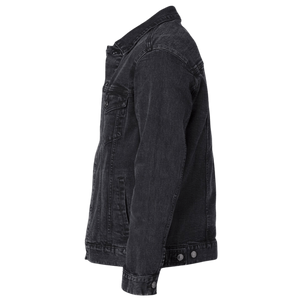
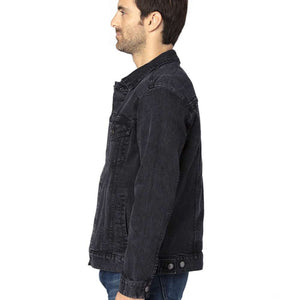
On
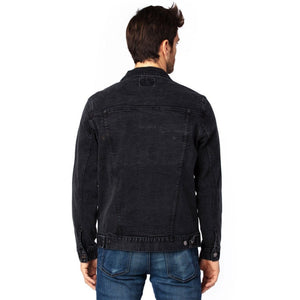
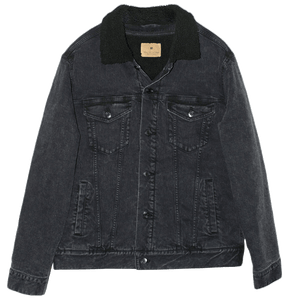
black denim, the scene deepens into something powerful and intimate. The
green knot glows against the dark base like an illuminated seal, and the three intertwined
hares feel engraved into shadow—crossings deepening, loops reading like
carved channels. The two painted hares in front become the primary
light-and-life layer: their highlights glow, their eyes feel more intense, and
the grass becomes a dark threshold rather than a meadow. As the fabric folds,
the knot’s crossings appear and disappear, and the hares inside seem to rotate
slowly around the center.
On
black denim, the artwork feels like a protective sigil of vigilance—three
hares bound into symbol behind two living hares in the present—speed and
stillness carried close, ready, and quietly fierce.