A
single red rose growing upward from a cracked slab of pale gray concrete. the
rose has layered red petals forming a full bloom at the top of a slender green
stem with two small green leaves and visible thorns. the concrete beneath is
broken into jagged sections with dark fissures and rough texture, with small
fragments scattered nearby. one red petal falls to the right of the stem. the
background is black. This artwork is titled “Concrete Rose” and created by The
Nygerians
This
image is an image of contrast, because the image is built on opposition made
visible. At center, a single rose rises straight upward, its stem thin but
firm, emerging from a jagged break in a slab of concrete. The concrete occupies
the lower half of the composition, fractured into uneven plates with dark
cracks branching outward like veins. The surface is chalky and worn, edges
chipped and irregular, small debris suspended just beyond the break as if the
rupture is recent.
The
rose itself is rendered with restraint and precision. The bloom sits high and
slightly left of center, petals layered tightly inward before opening outward
into soft, curved folds. The red is rich and matte, darker in the inner spiral,
lighter along the outer edges where the petal tips thin. A single petal has
detached and drifts to the right, hovering mid-fall, its shape intact and
curved, echoing the bloom above without touching it.
Your
eye follows the stem downward. It is slender and green, slightly darker along
one side, lighter where light would catch. Small thorns punctuate the stem at
intervals, angled outward, subtle but unmistakable. Two leaves branch near the
midsection, serrated edges visible, veins lightly indicated. The stem pierces
the concrete cleanly, rising from a narrow opening where the material has split
under pressure.
A
shift in mood happens when you notice how empty the space is around it. The
background is entirely black. No sky, no ground beyond the slab, no environment
to contextualize the moment. This absence isolates the relationship between
growth and resistance, making the rose and the concrete the only conversation
taking place.
The
composition is vertical and contained. Nothing leans dramatically. Nothing
explodes outward. Even the cracks in the concrete spread with quiet
determination rather than chaos. The rose does not twist or bend; it grows
straight up, unembellished, held in place by its own structure.
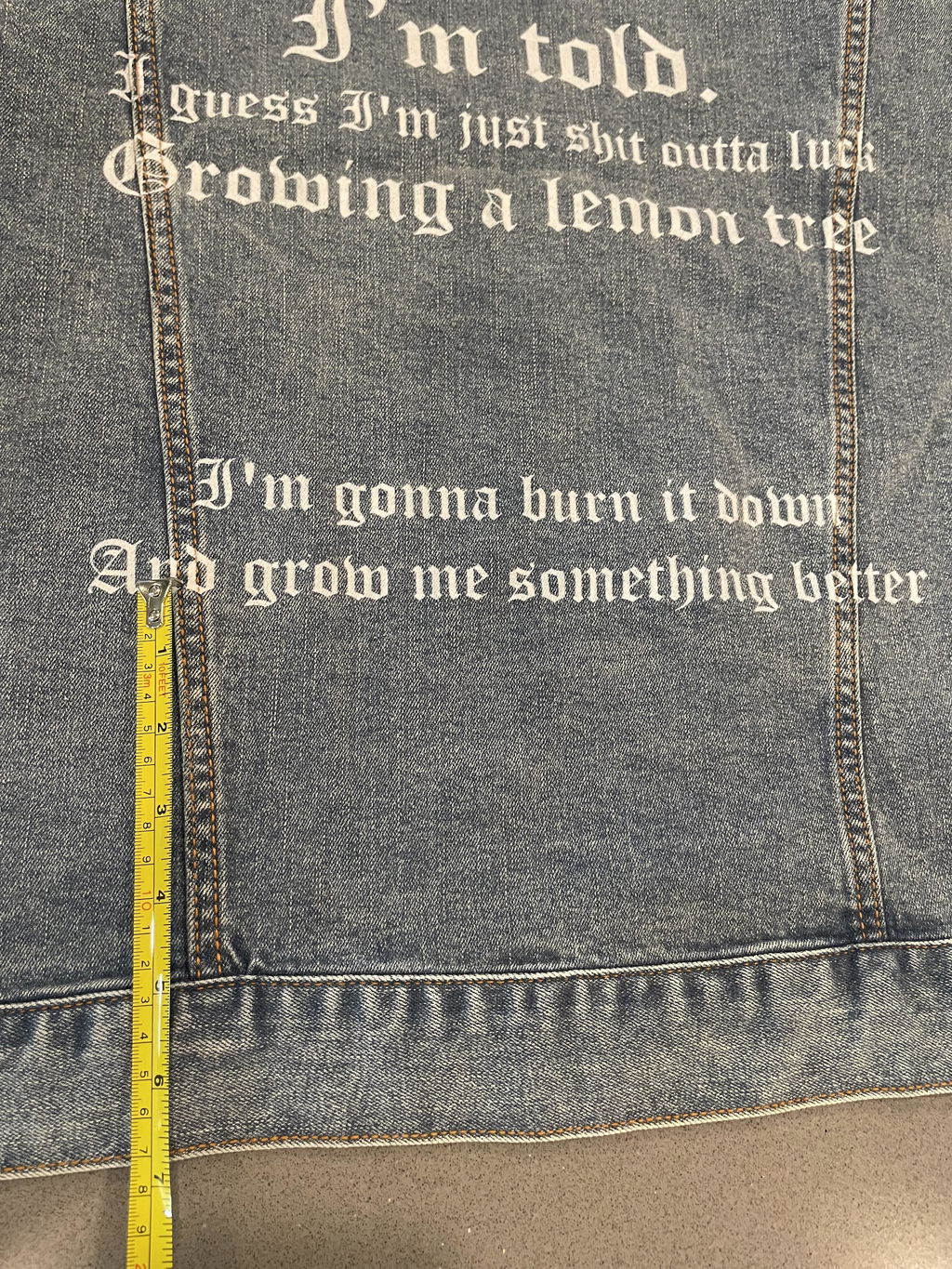
On
stonewashed denim, the contrast softens immediately. The gray concrete diffuses
into the worn twill, its cracks blending slightly so the surface feels older
and more eroded. Pigment sinks into the denim grain, rounding the sharp edges
of the broken slab. The rose’s red deepens into a muted, velvety tone, less
declarative, more remembered.
The
fallen petal on stonewash feels like part of the fabric rather than a floating
object, its edges softening as it blends into texture. Emotionally, the piece
shifts toward endurance. The rose feels like something that has survived for a
long time, not something newly emerged.
Stonewashed
denim turns Concrete Rose into a story of persistence over time. The
image feels worn-in, familiar, and quietly resilient, like a truth carried
close rather than announced.
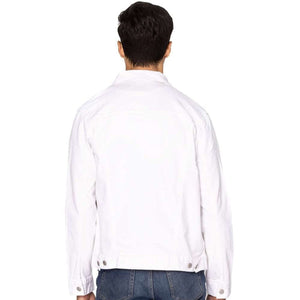
On
white denim, clarity takes hold. The concrete becomes stark and graphic, every
crack sharply legible. The broken edges feel brittle and exposed. Against this,
the rose’s red blooms vividly, its petals crisp and defined. The green stem and
leaves pop cleanly, their edges sharp and intentional.
The
fallen petal reads as a deliberate accent, suspended in clear space.
Emotionally, white denim frames the artwork as a statement. The opposition
between softness and hardness becomes immediate and unapologetic. The rose
feels defiant, not fragile.
On
black denim, the composition compresses inward. The background disappears
entirely into the fabric, causing the concrete slab to feel like it floats in
darkness. The rose’s red intensifies, glowing subtly against the black base.
The stem and leaves become luminous points of life emerging from shadow.
The
cracks in the concrete deepen visually, their darkness merging with the fabric,
making the rupture feel profound rather than surface-level. Emotionally, black
denim transforms Concrete Rose into something intimate and powerful — a
quiet act of survival held close to the body, where strength is not loud, but
undeniable.