A dense garden of poppy-like flowers with tall green stems and large layered blooms in peach, coral, blush pink, soft yellow, and muted orange. the flowers are outlined in dark hand-drawn lines with visible sketch marks and textured washes. the background is filled with overlapping floral patterns, woven textures, and warm pink and tan tones, creating a layered mixed-media effect. This artwork is titled “Flower Garden” and is created by Canvas & Quotations (Monika Chugh and Alka Chopra)
You drift first into the stems — tall, narrow, and vividly green, rising upward in loose clusters. They are not straight; each bends slightly, responding to its own weight and the pull of neighboring growth. The green is layered in strokes that thicken and thin, darker at the edges, lighter where the pigment thins, giving the stems a sense of elasticity rather than rigidity. On denim, these greens would sink deeply into the twill, grounding the entire composition with vertical rhythm. It matters because the garden feels alive before it feels decorative.
Then the blooms open around you. Large, poppy-like flowers dominate the space, their petals wide and softly folded, overlapping in irregular layers. Each bloom is outlined in expressive dark linework that wavers slightly, revealing the pressure and pace of the artist’s hand. Inside those outlines, color behaves intuitively rather than evenly: peach melts into coral, blush slides into pale yellow, and muted orange gathers near the centers. The petals are not smooth; they carry faint scratch marks, thin lines, and areas where the pigment pools or thins, creating a surface that feels touched repeatedly. On fabric, these layered washes would fragment gently across the weave, giving the petals depth and softness that shifts with movement. It matters because the flowers feel grown, not placed.
A shift in mood happens when you notice how crowded the space is — and how comfortable that crowding feels. Flowers overlap one another freely. Some blooms are fully open, others tilt downward or partially close, their edges curling inward. No single flower claims dominance. The garden is collective. The density does not overwhelm; it supports. On denim, this overlap would create subtle depth changes as darker outlines and lighter interiors respond differently to light, reinforcing the feeling of layers rather than clutter.
The background deepens the texture. Behind the flowers, faint repeating floral shapes and woven patterns emerge in warm pinks, tans, and soft reds. These shapes are quieter than the foreground blooms, acting like memory or echo rather than subject. Their edges blur slightly, and the texture feels rubbed into the surface rather than painted cleanly. On fabric, these background elements would embed almost completely into the weave, becoming felt more than seen. They matter because they give the garden history.
Small details reward attention: dotted pollen-like clusters near flower centers, thin filament lines suggesting stamens, and occasional lighter patches where color lifts unexpectedly. These moments break uniformity and invite wandering rather than inspection. The composition does not guide the eye in a straight path; it encourages meandering.
There is no sky, no horizon, no ground line clearly defined. You are inside the garden, not looking at it. The scale stays intimate — stems rise past you, petals brush close, background patterns press forward. The scene feels immersive rather than scenic.
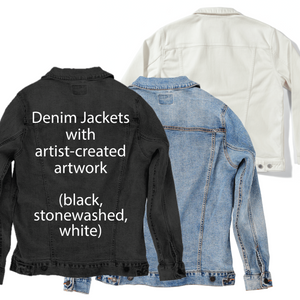
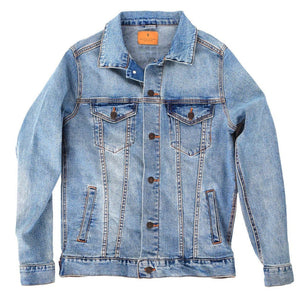
On stonewashed denim, the garden softens into something remembered. Petal edges blur gently, background patterns melt further into the fabric, and the greens mellow into mossy tones. The flowers feel like a place revisited over time, familiar and forgiving. The emotional tone becomes reflective and nurturing.
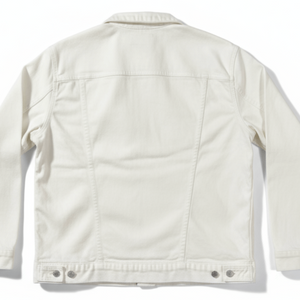
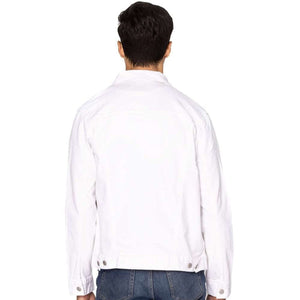
On white denim, clarity takes hold. The dark outlines sharpen, separating individual blooms more clearly, and the color contrasts become brighter and more playful. The layered construction of petals and stems becomes easier to trace. This clarity matters because it frames the garden as joyful abundance rather than haze.
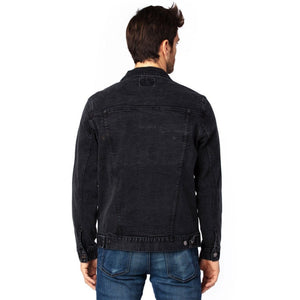
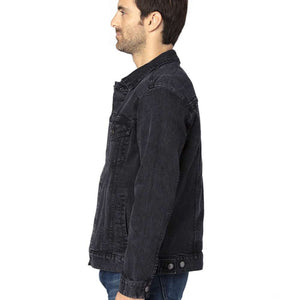
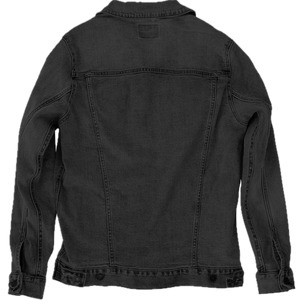
On black denim, the colors glow inward. Greens deepen, peaches and corals ignite, and the dark linework partially merges with the base, allowing the blooms to emerge through contrast. The garden feels lush and intimate, like color surfacing from shadow. As the fabric moves, different flowers step forward and recede, reinforcing the sensation of growth in motion.
In every version, the truth remains grounded and generous: a garden built from overlap and imperfection, where beauty is multiplied by proximity and nothing needs to stand alone to be seen.