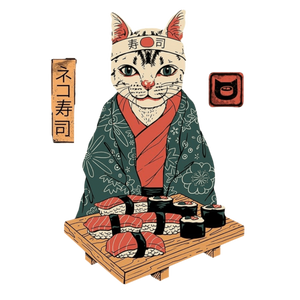
A gray-and-white tabby cat dressed as a sushi chef, seated behind a small wooden sushi counter. the cat wears a white headband with a red circle and Japanese characters, and a green patterned kimono with a red inner robe. Neatly arranged sushi pieces, including salmon nigiri and maki rolls wrapped in black nori, rest on the wooden board in front. Vertical Japanese text panels and a sushi icon float beside the cat against a solid black background. This artwork is titled “Neko Sushi Bar” and created by Vincent Trinidad
Stare into the cat’s face, because it holds the entire composition steady. The tabby sits squarely facing forward, shoulders relaxed but upright, posture composed and deliberate. Its fur is patterned in soft gray stripes over white, with fine linework defining the cheeks, forehead, and bridge of the nose. The eyes are almond-shaped and calm, pupils centered, gaze direct but welcoming rather than confrontational. A small pink nose anchors the face, and thin white whiskers extend outward in gentle arcs.
The headband frames the expression. Wrapped snugly across the forehead, it is off-white with visible texture, marked by Japanese characters and a red circle centered above the eyes. The band pulls the composition upward, echoing traditional sushi-chef attire while adding a ceremonial stillness. The cat’s ears rise above it, pink inside, sharply pointed, symmetrical, reinforcing balance and control.
Your attention lowers to the clothing. The cat wears a deep green kimono patterned with pale floral outlines, the fabric draping smoothly over the shoulders and arms. Beneath it, a red inner robe crosses neatly at the chest, adding warmth and contrast. The sleeves fall naturally, concealing the paws and giving the figure a formal, ritual quality rather than casual motion.
Then comes the counter. A low wooden sushi board sits directly in front of the cat, rendered with visible grain lines and warm honey tones. On top, sushi is arranged with care. Salmon nigiri lie in neat rows, orange fish layered over white rice, each piece wrapped with a precise band of black nori. To the right, compact maki rolls are stacked upright, their cross-sections visible, dark and graphic against the wood. Nothing is out of place; spacing and alignment are intentional.
A shift in mood happens when you notice the floating symbols. To the left, a vertical wooden plaque with Japanese text hangs in space, its surface lightly worn, edges softened. To the right, a square red icon bearing a sushi symbol balances the composition. These elements hover without casting shadows, reinforcing that this is an emblematic scene rather than a literal restaurant interior.
The background is absolute black. No walls, no floor, no depth cues. This emptiness isolates the cat, the counter, and the symbols, turning the scene into an icon of craft and presence. The cat does not prepare sushi in motion; it presides over it.
Linework throughout is clean and deliberate. Fur is finely detailed, fabric patterned but restrained, food graphic and precise. The visual language blends warmth and discipline, softness and structure.
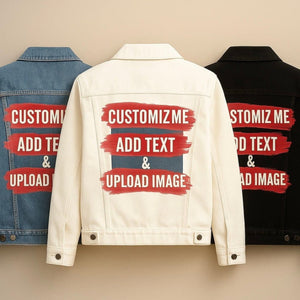
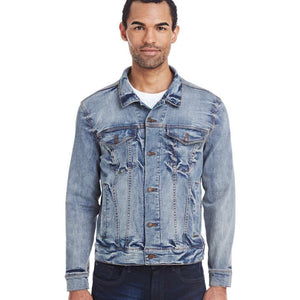
On stonewashed denim, the image softens into familiarity. The green kimono diffuses into deeper, muted tones, its floral patterns blending gently into the twill. The red inner robe warms and darkens slightly. The wooden counter becomes more rustic, its grain less sharp, more weathered.
The sushi colors soften, especially the salmon, which becomes more earthy and subdued. Emotionally, the piece shifts toward comfort and ritual — a place visited often, where care is consistent rather than performative.
Stonewashed denim makes Neko Sushi Bar feel lived-in and welcoming, like a trusted spot remembered through texture and time.
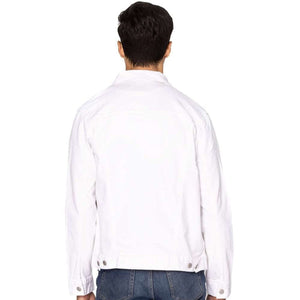
On white denim, clarity takes hold. The cat’s facial markings sharpen, each stripe crisp. The kimono pattern becomes clean and decorative, and the red inner robe stands out boldly. The sushi reads instantly: distinct rice grains, sharp nori bands, vivid salmon.
The Japanese text panels and sushi icon become strong graphic anchors. Emotionally, white denim presents the artwork as polished and intentional — a celebration of craft, cleanliness, and presentation.
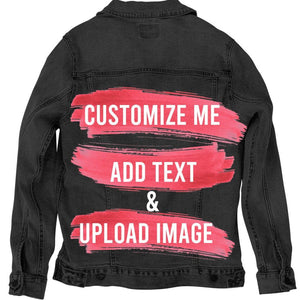
On black denim, the scene becomes intimate and reverent. The background disappears entirely, allowing the cat’s face, headband, and sushi to glow forward. The red accents intensify, and the green kimono deepens into a rich, almost nocturnal tone.
The sushi feels ceremonial rather than casual, and the cat’s calm gaze becomes the focal point. Emotionally, black denim transforms Neko Sushi Bar into a quiet emblem of mastery — focused, composed, and respectful — where tradition and precision are held close against shadow, without noise or excess.