Illustration
of three black ravens arranged in a circular formation around a central Celtic
triskelion symbol rendered in blue, teal, and violet spirals. each raven is
shown in a different orientation with wings spread or folded, gripping branches
adorned with oak leaves, acorns, berries, or white blossoms. additional green
foliage frames the composition. the white background highlights the contrast
between the dark ravens, vibrant triskelion, and botanical details. this
artwork is titled “Raven Fey Celtic”by Brigid Ashwood
Three
ravens circle one another in a closed, deliberate loop, their bodies angled so
motion feels perpetual rather than chaotic. Each bird occupies its own arc of
space, wings extended or partially folded, feathers layered in deep charcoal
and blue-black tones that absorb light rather than reflect it. The composition
doesn’t suggest flight away — it suggests orbit, a turning that never breaks.
At
the center of that rotation sits a Celtic triskelion, rendered in cool
gradients of indigo, teal, and violet. Its three arms spiral outward with equal
weight, each curl tightening at the core before releasing into broader arcs.
The triskelion is not background ornamentation; it is the structural anchor that
the ravens respond to. You can see how the ravens’ bodies mirror its geometry —
heads angled along the curves, wings echoing the same rotational rhythm. On
denim, those gradients in the triskelion settle into the weave and become
subtly textured, making the center feel less like a flat symbol and more like a
carved pivot point. It matters because everything in the image turns around
this center.
Your
eye moves raven by raven. One raven at the upper left stretches forward with
wings lifted, its beak gripping a small oak branch heavy with acorns and
autumn-toned leaves. The leaves are painted in warm browns and golds, their
edges slightly curled, introducing seasonal weight against the raven’s dark
form. A second raven at the right side tilts downward, wings extended and body
elongated, holding a slender branch with pale green leaves, the stems delicate
against its darker feathers. The third raven at the lower left sweeps upward,
wings spread wide, carrying a cluster of berries and small white blossoms. Each
botanical element is distinct — oak, leafed branch, berry cluster — and each is
held differently, reinforcing that the ravens are not mirrored copies but
separate presences within the same cycle.
The
micro-detail lives in the feathers. Along the wings, brushstrokes layer tightly
near the shoulders and loosen toward the tips, creating a subtle sense of
airflow. Feather edges are soft, not sharp, with pigment thickening slightly
where wing joints bend. On fabric, these darker feather masses sink into the
twill, while lighter highlights along the edges catch first, giving the ravens
a sense of depth that shifts as the garment moves. The birds feel weighted,
intentional, and grounded — not decorative silhouettes.
A
shift in mood happens when you notice there is no enclosing circle.
Unlike many Celtic designs, the rotation is held by the ravens themselves and
the triskelion at the center, not by a border. The white negative space around
them functions like breath, allowing the rotation to feel open and alive. The
ravens form the boundary.
Color
becomes emotion through contrast. The ravens remain nearly black, absorbing
surrounding hues, while the triskelion glows cool and luminous. The botanical
elements introduce warmth — reds, golds, greens — acting as seasonal markers
within the cycle. Together, these elements suggest time passing rather than a
single moment: growth, harvest, dormancy, return.
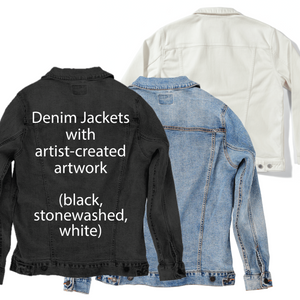
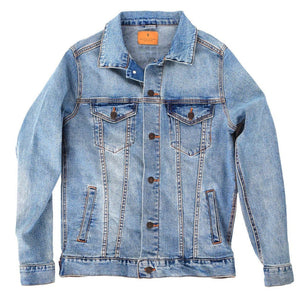
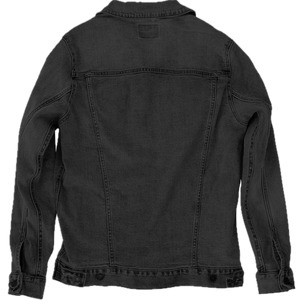
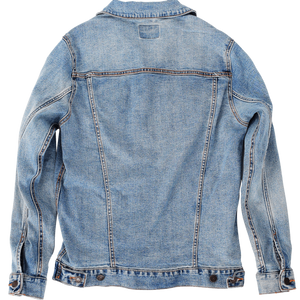
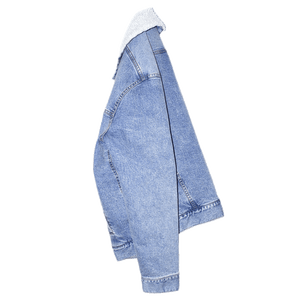
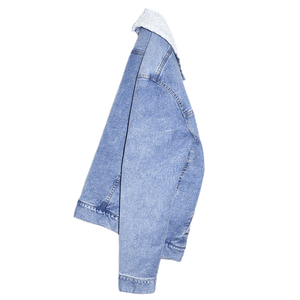
On stonewashed denim, Raven Fey Celtic takes on an earthy,
ancient quality that feels deeply rooted in folklore. The softened blue-gray
fabric blends naturally with the teal and violet spirals of the triskelion,
making the central symbol feel embedded in the denim rather than printed on
top. The ravens appear slightly weathered, like guardian spirits etched into
worn stone or leather.
The botanical elements—oak leaves, acorns, and
blossoms—harmonize beautifully with the stonewashed texture, enhancing the
organic, woodland feel of the piece. This colorway emphasizes myth, age, and
quiet power, giving the jacket a timeless, talismanic presence.
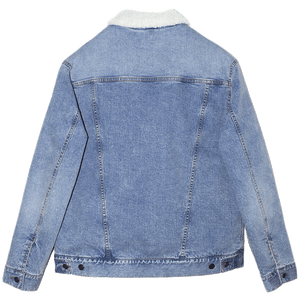
The
ravens deepen into velvety shadow. Feather details soften as pigment spreads
into the worn grain, making the birds feel older and more talismanic. The
triskelion’s cool colors mellow, blending slightly at their transitions, while
the leaves and berries embed into the fabric like pressed specimens. As the
jacket moves, the rotation feels slower, more ritualistic — a cycle remembered
rather than enacted.
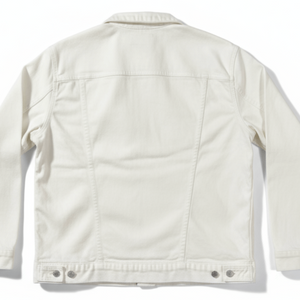
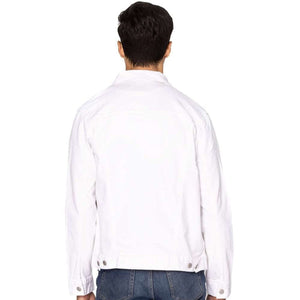
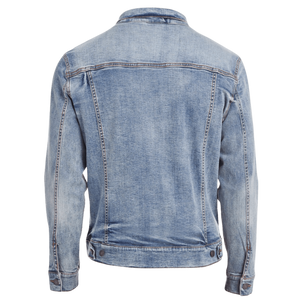
On
white denim, clarity takes hold. The artwork becomes crisp, symbolic,
and highly detailed. The black ravens stand out sharply, allowing every feather
edge, wing curve, and posture to read clearly. The blue, teal, and violet
triskelion glows against the clean background, becoming a strong focal point.
The
foliage and blossoms appear fresh and illustrative, almost like a page from an
illuminated manuscript. This version feels refined and ceremonial, highlighting
the balance and symmetry of the composition while preserving its mystical tone.
Each raven separates cleanly from the background, and their differing wing
positions and botanical elements are easiest to distinguish. The triskelion
becomes crisp and architectural, its spiral logic unmistakable. This clarity
matters because it presents the artwork as intentional structure — three
ravens, one turning system, clearly defined.
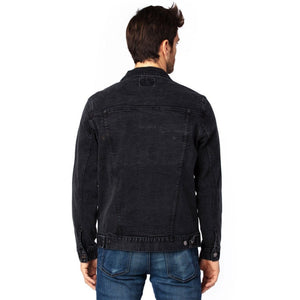
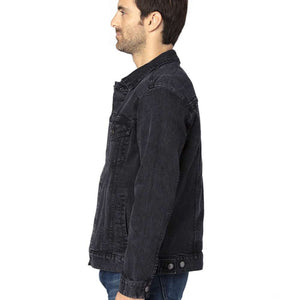
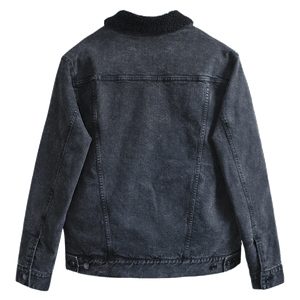
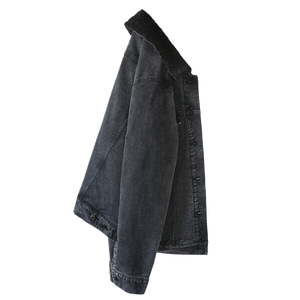
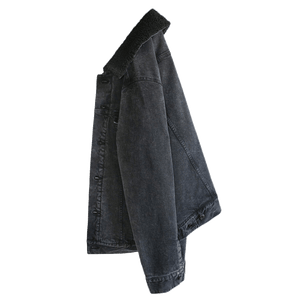
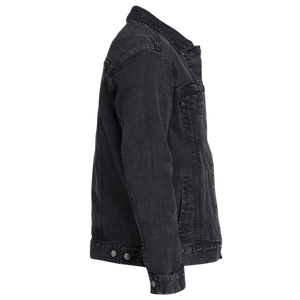
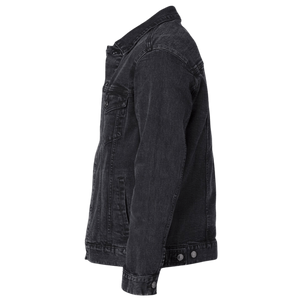
On black denim, Raven Fey Celtic becomes dramatic, powerful,
and intensely atmospheric. The ravens blend seamlessly into the dark fabric,
giving them an almost shadow-like presence, while their forms are revealed
through subtle highlights and feather textures. The triskelion spirals glow
vividly, appearing almost luminous against the darkness.
The botanical elements—leaves, acorns, and
blossoms—float like enchanted symbols around the ravens, adding contrast and
depth. On black denim, the artwork reads as bold and protective, evoking a
nocturnal, ritualistic energy that feels striking and iconic.
The
piece becomes intimate and powerful. The ravens partially merge with the base,
their forms emerging through highlights and feather edges. The triskelion glows
vividly, acting like a luminous core in darkness. The botanical elements appear
and disappear as the fabric folds, like offerings revealed only in motion. The
rotation feels internal, secretive, and protective.
In
every version, the truth remains the same: three ravens bound into a single
turning — not trapped, not scattered — but held in balance by symbol, season,
and motion itself.