Illustration
of three black ravens arranged in a circular formation around a central Celtic
triskelion symbol rendered in blue, teal, and violet spirals. each raven is
shown in a different orientation with wings spread or folded, gripping branches
adorned with oak leaves, acorns, berries, or white blossoms. additional green
foliage frames the composition. the white background highlights the contrast
between the dark ravens, vibrant triskelion, and botanical details. this
artwork is titled “Raven Fey Celtic”by Brigid Ashwood
You
drift first into the turn of the circle. Three ravens move around a central
triskelion, their bodies angled so the rotation feels deliberate and complete
rather than chaotic. Each bird occupies its own arc of space, wings extended in
different states of motion — one lifted and open, one pitched downward in a
controlled glide, one sweeping upward with feathers spread wide. The
composition does not suggest flight away. It suggests orbit.
At
the center, the Celtic triskelion anchors everything. Its three curling
arms spiral outward from a triangular core, painted in cool gradients of cobalt
blue, teal, and deep violet. The lines are smooth and even, thickening slightly
at the curves before narrowing as they turn inward. On denim, these curves
would settle into the weave, creating a tactile sense of rotation — motion you
can feel rather than just see. The ravens’ bodies mirror the triskelion’s
geometry, their wings and heads aligned along the same rotational logic. It
matters because the birds are not circling randomly; they are bound to
structure.
Each
raven is distinct. The upper-left raven lifts its wings outward, chest forward,
beak holding a small oak branch heavy with acorns and autumn-toned leaves.
The leaves are warm brown and copper, edges curled and weighty, introducing the
feeling of harvest and gravity. The right-side raven angles downward, wings
folded closer, holding a green leafy sprig, its leaves elongated and
lighter in tone, suggesting growth and renewal. The lower-left raven sweeps
upward, wings spread wide, carrying a cluster of red berries and small white
blossoms, the berries round and glossy, the flowers delicate and pale.
These botanical elements are not decorative repeats — each is unique, clearly
chosen, and placed with intention.
The
micro-detail lives in the feathers. Along each raven’s wings, brushstrokes
layer densely near the shoulders and loosen toward the tips, creating a sense
of airflow. The pigment deepens at the joints and softens at the edges,
absorbing light rather than reflecting it. On fabric, these darker feather
masses would sink into the twill while lighter highlights catch first, giving
the ravens a shifting depth as the garment moves. The birds feel weighted,
intelligent, and grounded — not silhouettes, but presences.
The
background changes the emotional register entirely. Unlike the stark white of
the earlier version, this piece sits against a warm beige field patterned
with repeating Celtic knot motifs. The pattern is subtle — lighter and
darker tones of cream and sand — visible enough to add texture without
competing. It reads like woven cloth or aged parchment, reinforcing the sense
that this scene exists within tradition and time. The ravens and triskelion
feel embedded in lineage rather than floating in space.
There
is no enclosing ring. The rotation is held by the ravens themselves and
the triskelion at the center. The negative space between wings and symbols
becomes breath, allowing the circular motion to feel alive rather than sealed.
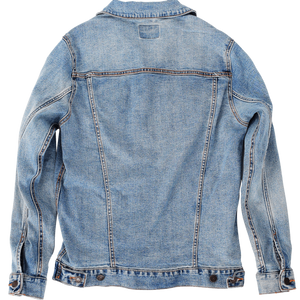
On
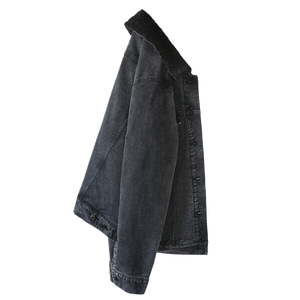
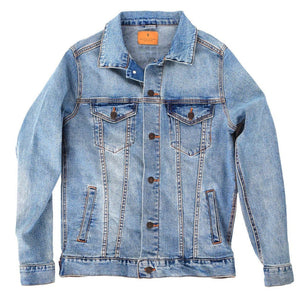
stonewashed denim, Raven Fey Celtic 2 feels warm, antique, and
deeply folkloric. The faded blue-gray fabric gently softens the beige patterned
background, allowing the ravens and triskelion to feel naturally embedded into
the denim. The blue, teal, and violet spirals blend beautifully with the
stonewashed tones, creating a cohesive, aged look reminiscent of weathered
tapestries or old storybook illustrations.
The
ravens deepen into velvety shadow. Feather edges soften as pigment spreads into
the worn grain, and the beige background pattern diffuses, becoming more
textile-like. The triskelion’s cool colors mellow slightly, and the botanical
elements embed into the fabric like pressed specimens. As the jacket moves, the
rotation feels slower and more ritualistic — a cycle remembered rather than
enacted.
The
botanical details—oak leaves, acorns, berries, and blossoms—take on an earthy
richness against the softened fabric. This version emphasizes heritage and
mythology, making the artwork feel like a symbol passed down through time
rather than a surface print.
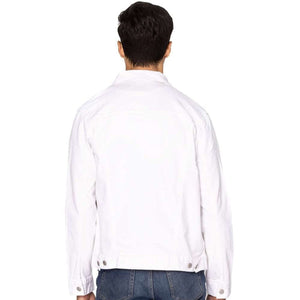
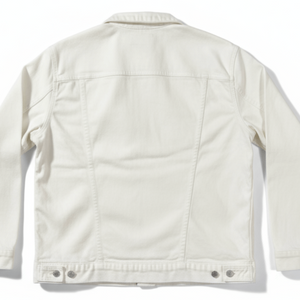
On
white denim, clarity takes hold. The artwork becomes crisp, luminous,
and highly illustrative. The warm beige knot-patterned background reads
clearly, creating strong contrast with the black ravens and making their
feather textures and poses immediately noticeable. The triskelion spirals
appear vibrant and clean, anchoring the composition at the center.
Each
raven separates cleanly from the background, and the differences in wing
position and botanical offerings are easiest to read. The triskelion becomes
crisp and architectural, its spiral logic unmistakable. The beige pattern
lightens, framing the scene with calm order. This clarity matters because it
presents the artwork as deliberate design — three ravens, one turning system,
clearly defined.
The
seasonal foliage and berries feel fresh and decorative, almost like elements
from an illuminated manuscript or fine art print. On white denim, this piece
feels ceremonial and refined, showcasing the balance and symmetry of the design
with clarity and elegance.
On
black denim, the piece becomes intimate and powerful. Raven Fey
Celtic 2 becomes dramatic and richly atmospheric. The ravens blend into
the dark fabric, emerging through subtle highlights and contours, while the
beige patterned background glows softly, creating a striking contrast. The
blue, teal, and violet triskelion appears almost luminous against the darkness,
drawing the eye inward.
The
botanical elements—especially the red berries and pale blossoms—float vividly
around the ravens, adding depth and visual interest. This colorway gives the
artwork a nocturnal, ritualistic quality, making it feel powerful, protective,
and boldly symbolic.
The
ravens partially merge with the base, emerging through highlights along wing
edges and beaks. The triskelion glows vividly, acting like a luminous core in
darkness. The acorns, leaves, berries, and blossoms appear and disappear as the
fabric folds, like offerings revealed only in motion. The background pattern
recedes almost entirely, making the rotation feel internal and secretive.
In
every version, the truth holds steady: three ravens bound into a single
turning, each carrying a different season, all held together by symbol,
structure, and time.