Illustration of the Stonehenge stone circle glowing in cool blue light
beneath a deep, star-filled night sky. above the stones, a wide arc of moon
phases spans from dark new moon through waxing phases to a bright full moon at
the center, then waning back to darkness. a radiant burst of light flares at
the center of the arc, sending beams downward toward the standing stones,
illuminating the ground and monoliths with a mystical glow. this artwork is
titled “Stonehenge Moon” & created by artist Brigid Ashwood
You
drift first into the stillness of the stones. They rise heavy and silent from
the darkened ground, their rough vertical faces catching cold blue light along
cracked edges and weathered surfaces. Some stand upright and solitary, others
support horizontal lintels, their weight pressing downward in quiet permanence.
The stones do not feel arranged so much as placed, as if the earth
itself decided where they should stand and then never moved them again.
Your
eye lifts upward and the sky opens. Above Stonehenge, the moon unfolds in
sequence — a full lunar cycle arcing from left to right. On one end, the moon
begins in darkness, barely visible; it grows brighter phase by phase until it
reaches full illumination at the center, then slowly dims again into shadow.
Each moon is distinct, not repeated — craters and surface textures shift subtly
from phase to phase, and the glow intensifies near the center of the arc. The
moons are evenly spaced, creating a measured rhythm that feels astronomical
rather than decorative.
At
the heart of the arc, a brilliant point of light erupts — brighter than the
moon itself — sending soft beams downward like a celestial alignment. That
light feels intentional, as if it marks a precise moment in time. On denim,
this central glow would catch first along the raised weave, breaking into small
highlights that radiate outward, while darker sky tones sink into the fabric.
It matters because the alignment becomes tactile — a moment you don’t just see,
but feel.
A
shift in mood happens when you notice how the stones respond to the sky. The
upper edges glow faintly, while their bases dissolve into shadow. The light
does not flatten the stones; it reveals their mass. On fabric, the darker
crevices would deepen, the lighter faces lift, giving the stones a carved,
sculptural presence that changes as the garment moves. The stones feel anchored
— unmoved by the sky, yet deeply connected to it.
The
sky itself is alive with depth. Stars scatter unevenly across the blue-black
field, some sharp pinpoints, others softened like distant dust. Subtle
nebula-like textures drift behind the moons, adding layers rather than
distraction. There is no horizon line competing for attention — only earth
below and cosmos above, held in balance.
There
are no figures here, no symbols added on top of the scene. The meaning comes
from alignment alone: stone, sky, light, time.
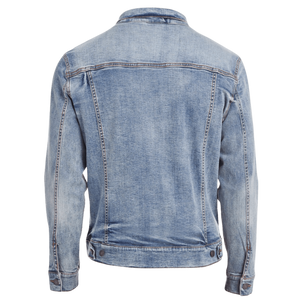
On stonewashed denim, the night softens into atmosphere. Stonehenge
Moon feels ancient, atmospheric, and deeply elemental. The faded blue-gray
fabric blends seamlessly with the cool lunar tones, making the stones appear
naturally carved into the jacket itself. The starry sky softens slightly,
creating a dreamy, mist-like transition between the heavens and the earth
below.
The arc of moon phases feels quietly powerful
on stonewashed fabric, as if charted by time rather than light. This version
emphasizes age, mystery, and sacred landscape energy, giving the artwork a
weathered, timeless presence reminiscent of old myths and night rituals.
The
star field diffuses gently into the worn grain, and the moon phases blur
slightly at their edges, becoming more dreamlike. The stones feel older, their
edges less sharp, as if remembered rather than observed. As the jacket moves,
the central glow pulses subtly, giving the impression of slow cosmic breath.
The emotional tone becomes ancestral — time measured in generations, not
moments.
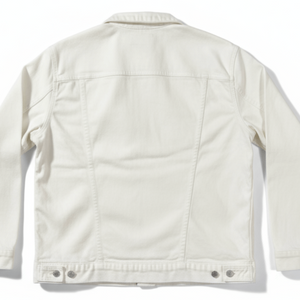
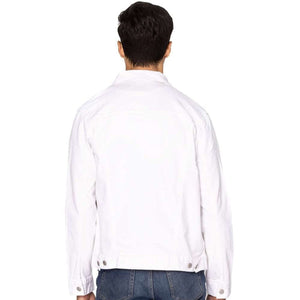
On white denim, clarity takes hold. The artwork becomes luminous,
expansive, and strikingly clear. The deep blues of the night sky contrast
sharply against the white background, making the moon phases pop with crisp
definition. The central full moon and radiant flare appear especially bright,
drawing the eye immediately upward.
Stonehenge itself reads with sculptural
clarity, and the beams of light feel almost celestial against the clean fabric.
On white denim, Stonehenge Moon feels
expansive and awe-inspiring — like a cosmic diagram rendered as wearable art.
Each
moon phase reads distinctly, the progression unmistakable. Crater textures
sharpen, and the alignment feels scientific as well as mystical. The stones
become crisp silhouettes against the luminous sky. This clarity matters because
it frames the artwork as deliberate observation — cycles seen clearly, order
revealed.
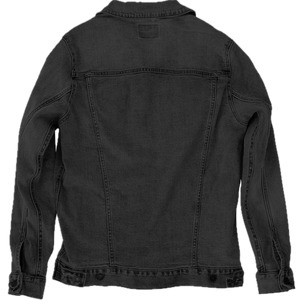
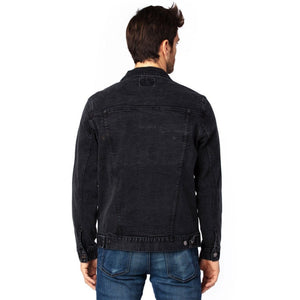
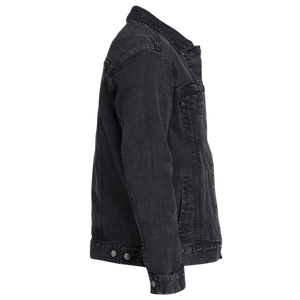
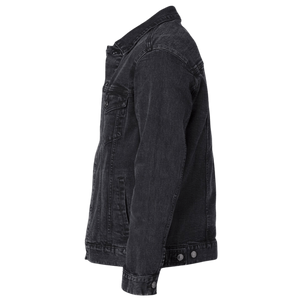
On black denim, the piece becomes profound and immersive. The sky
deepens into near-black, and the moons glow like suspended lanterns. Stonehenge
Moon becomes dramatic, immersive, and intensely mystical. The night sky
blends seamlessly into the fabric, making the glowing moon phases and radiant
central flare appear suspended in space. The stones rise from darkness like
ancient sentinels, illuminated by lunar power.
The beams of light feel stronger and more
focused on black denim, enhancing the ritualistic and cosmic energy of the
scene. This version feels powerful and otherworldly — a statement piece that
evokes astronomy, myth, and sacred time cycles all at once.
The
central light feels intense, almost sacred, while the stones emerge as dark
monoliths edged in blue fire. As the fabric folds, stars appear and vanish, and
the alignment feels alive, as if it only fully reveals itself in motion.
In
every version, the truth remains steady: time arcing above stone, light
measuring the night, and the earth standing witness — unmoved, aligned,
enduring.